 how-to
7 Signs You Need Professional Backflow Testing
Table of Contents
- What Backflow Is and Why It Threatens Your Drinking Water
- 7 Signs You Need Professional Backflow Testing
- 1. Discolored or Rusty Water From a Tap
- 2. Strange Tastes or Unusual Odors
- 3. A Sudden Drop in Water Pressure
- 4. Water Draining Back or Bubbling at a Fixture
- 5. Visible Leaks or Damage on the Preventer Itself
- 6. A Missed or Lapsed Annual Test Date
- 7. Recent Plumbing Work, Main Breaks, or Fire Hydrant Use Nearby
- When to Call a Plumber, the Utility, or a Certified Tester
- How to Tell Backflow Symptoms From Ordinary Plumbing Problems
- How Do I Tell If My Home Has a Backflow Preventer?
- How Often to Test a Backflow Preventer
- Backflow Preventer Leaking: What It Means and What to Do
- What to Do After a Failed Backflow Test
- What a Professional Backflow Test Includes
- Frequently Asked Questions
Last Updated: October 18, 2026
What Backflow Is and Why It Threatens Your Drinking Water
Backflow is the reverse flow of water in a pipe system, and it can pull contaminants into the clean water supply that feeds your taps.
That reversal happens in two ways:
- Backsiphonage: a pressure drop in the main pulls water backward, often during a main break or heavy fire hydrant use.
- Backpressure: higher pressure on your side of the system pushes water back toward the main.
A backflow preventer is a valve that blocks this reverse flow. It protects your drinking water from cross-connections with irrigation lines, boilers, and hose bibs.
When a preventer fails, contaminated water can reach your glass. That is the health risk behind every test requirement.
7 Signs You Need Professional Backflow Testing
These seven warning signs tell you it is time to call a certified tester. Some are obvious. Others are easy to miss until a device fails a compliance check. For each sign, the table below also shows what to do first and how quickly to act, so you can triage before you pick up the phone.
1. Discolored or Rusty Water From a Tap
Brown, yellow, or cloudy water at one fixture points to a problem.
Rusty water that appears at multiple taps is the bigger worry. It can mean your water supply lines are pulling in water from a contaminated source.
First step: Run the cold tap for two minutes. If the color clears and stays clear, note the date and move on.
2. Strange Tastes or Unusual Odors
Clean water should taste like nothing. A metallic, bitter, or chemical taste is a red flag. So is a smell like sulfur or sewage.
Try this first: run the cold tap for two minutes. If the taste or odor stays, stop drinking the water and call a professional.
First step: Do not boil the water to "fix" a chemical or sewage smell, boiling concentrates some contaminants.
3. A Sudden Drop in Water Pressure
Low water pressure can be a worn fixture or a clogged aerator. It can also signal a failing backflow prevention device.
Test it: compare pressure at two taps. If both dropped at once, the issue sits in your supply, not the fixture.
First step: Check with a neighbor. If their pressure also dropped, the cause is likely on the utility side, call the water provider.
4. Water Draining Back or Bubbling at a Fixture
Watch a faucet after you shut it off. Water that drains backward or bubbles at the spout suggests a pressure change in the line. This is backsiphonage in action.
Do not ignore it. A bubbling fixture can mean your clean water supply is briefly connected to a dirty one.
First step: Shut off the fixture's supply valve if you can reach it safely. Do not use that tap until a tester clears the device.
5. Visible Leaks or Damage on the Preventer Itself
Find your backflow preventer and look at it. Cracks, corrosion, mineral buildup, or drips mean device failure is likely. A leaking preventer is a common reason tests fail.
First step: Place a bucket under the drip and shut off the device's supply if the leak is steady. Do not attempt a repair yourself, a failed seal often means the internal check valve has failed too.
6. A Missed or Lapsed Annual Test Date
Many public water systems and local health departments require annual testing for certain devices. If your last test report is more than a year old, you may be out of compliance.
Check the tag on the device. Testers usually write the date and their certification number on it.
First step: Call your water authority and ask for the compliance deadline for your device type.
7. Recent Plumbing Work, Main Breaks, or Fire Hydrant Use Nearby
A main break, nearby fire hydrant use, or pump failure can cause a sudden pressure change. That change is exactly when backflow happens. If any of these occurred in your area, schedule an inspection.
First step: Watch for the other six signs for 48 hours after the event. If any appear, treat it as an active backflow event and call a tester.
| Sign | What It Suggests | Urgency | First Step |
|---|---|---|---|
| Discolored or rusty water | Possible contamination | High | Flush two minutes; call tester if it returns |
| Strange taste or odor | Possible contamination | High | Switch to bottled water; call utility |
| Sudden pressure drop | Failing device or supply issue | Medium | Check with a neighbor first |
| Draining or bubbling fixture | Active backsiphonage | High | Shut off fixture; call tester same day |
| Leaks or damage on preventer | Device failure | Medium | Bucket the drip; do not self-repair |
| Lapsed annual test | Compliance risk | Medium | Confirm deadline with water authority |
| Nearby main break or hydrant use | Pressure change event | Medium | Monitor for 48 hours |
When to Call a Plumber, the Utility, or a Certified Tester
Not every symptom needs the same call. Use this rule of thumb:
- Call a plumber when one fixture is affected and the cause looks like a worn cartridge, aerator, or supply line.
- Call your water utility when multiple homes on the block show the same symptom, or when you smell sewage or chemicals in the water.
- Call a certified backflow tester when symptoms cross fixtures, follow a pressure event, or involve the preventer itself.
A common mistake is treating rusty water as a "harmless pipe quirk." If the discoloration returns after flushing, get it tested.
How to Tell Backflow Symptoms From Ordinary Plumbing Problems
The key difference is scope. Ordinary plumbing problems usually show up at one fixture. Backflow symptoms tend to appear across several fixtures at once, or right after a pressure event.
Use this quick test:
- One tap affected: likely a fixture or aerator issue.
- Multiple taps affected: suspect the supply or the preventer.
- Symptoms start after a main break or hydrant use: treat it as backflow until a test proves otherwise.
A common mistake is treating rusty water as a "harmless pipe quirk." If the discoloration returns after flushing, get it tested.
How Do I Tell If My Home Has a Backflow Preventer?
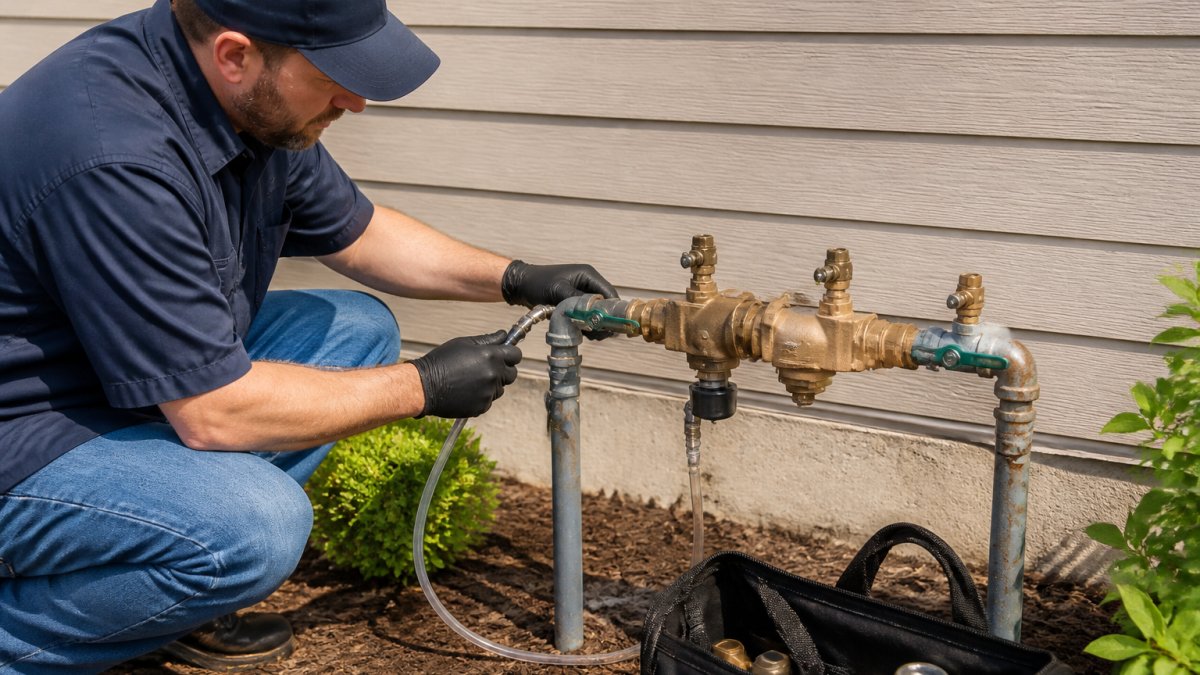
Look where the main water line enters your home. A backflow preventer is usually a brass or bronze valve with test cocks and a tag.
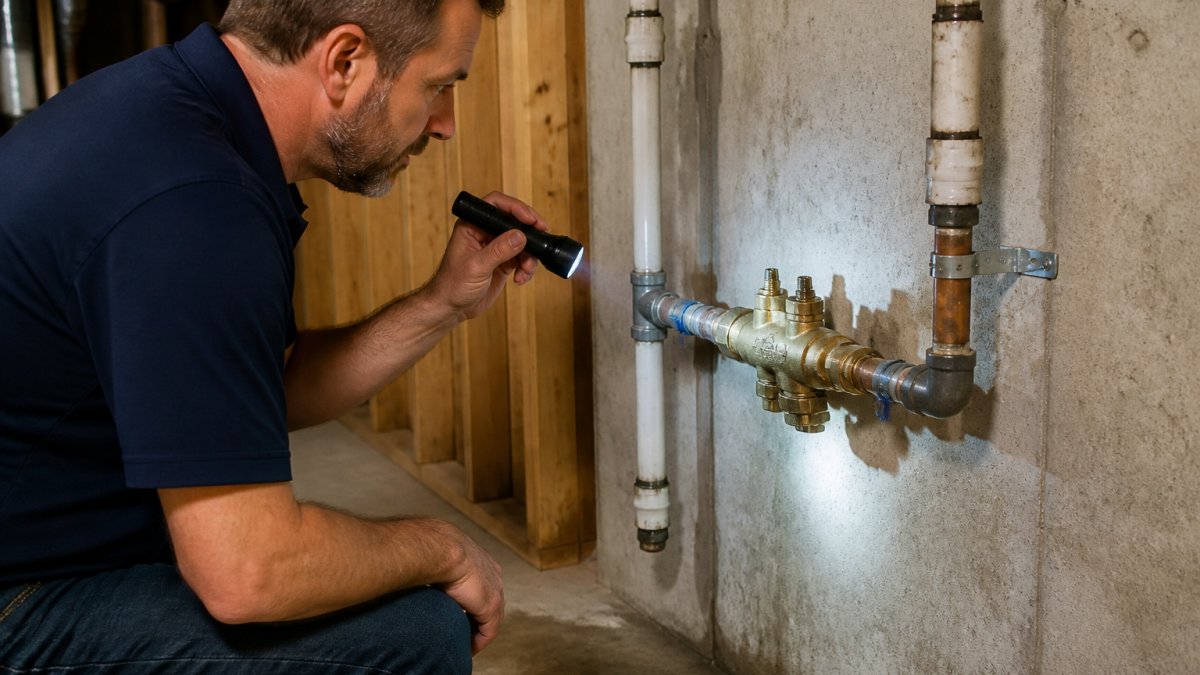
If you find a tag, read it. It should show the device type, the last test date, and the tester's certification number. No tag and no visible valve? Call a licensed professional to confirm.
How Often to Test a Backflow Preventer
Most devices need testing once a year. That is the standard answer to how often to test a backflow preventer, and it matches what most water authorities and local health departments require for high-risk facilities and irrigation systems.
Some factors can trigger an earlier test:
- After any repair or replacement
- After a main break or pressure event
- When a device is newly installed
Your water authority sets the exact inspection requirements for your property. Always confirm with them, and keep your test report on file.
Backflow Preventer Leaking: What It Means and What to Do
A leaking backflow preventer usually means a failed check valve, a worn seal, or debris stuck in the assembly. It will not fix itself, and a leak often leads to a failed test.
What to do:
- Shut off the water supply to the device if you can do so safely.
- Place a bucket under the leak to catch drips.
- Do not attempt to repair the valve yourself.
- Call a certified tester to inspect and repair it.
Repairs must meet code. A tester will confirm the fix and retest the device before signing off.
What to Do After a Failed Backflow Test
A failed backflow test means the device did not hold pressure or did not seal correctly. The tester will give you a written test report showing which check failed.
Next steps:
- Get the repair done. A certified technician will replace the faulty parts.
- Retest after repair. The device must pass a new test before it counts as compliant.
- Submit the report. Your water authority needs the passing report on file.
Do not skip the retest. An unrepaired device leaves your drinking water exposed to contamination.
What a Professional Backflow Test Includes
A professional test takes about 15 to 30 minutes per device for a standard reduced-pressure assembly, and closer to 45 minutes if the tester has to locate a buried vault or wait for access. The tester connects a calibrated differential-pressure gauge to the test cocks and checks each valve in sequence.
Before the Tester Arrives
A smooth test depends on access. Have these ready:
- Clear access to the device. Move boxes, shelving, or landscaping away from the valve and test cocks.
- The device tag and prior test report. The tester needs the device make, model, size, and serial number to fill out the report correctly.
- A water shutoff you can reach. The tester may ask you to shut off the supply if a valve fails mid-test.
What the Tester Actually Does
- Confirms the device type and orientation. A reduced-pressure assembly, double check valve, and pressure vacuum breaker each have a different test procedure.
- Connects the gauge and bleeds the test cocks. This step verifies the gauge reads zero before any pressure is applied.
- Tests the first check valve by isolating a zone and reading the pressure differential.
- Tests the second check valve the same way.
- Tests the relief valve on reduced-pressure assemblies by simulating a differential that should open the relief port.
- Records the readings on the test form and notes any valve that failed to hold.
What Pass and Fail Look Like
A pass means each check valve held the minimum pressure differential the device is rated for, and the relief valve opened and closed at the correct point.
A fail means one or more check valves did not hold, the relief valve did not open, or the device leaked at a test cock. The tester will note which check failed on the report.
How to Verify the Tester
Ask for three things before the test begins:
- The tester's certification card. Most states require a backflow prevention assembly tester certification, and some require a separate plumbing license.
- The calibration date on the gauge. A gauge past its calibration date can invalidate the test report.
- The report submission process. Ask whether the tester submits the report to the water authority directly or hands it to you to file. Missing the submission deadline is one of the most common compliance failures.
At M Property Services, our backflow assembly tester license and approvals let us test and document devices to code, and we handle the report submission so the deadline does not fall through the cracks. For the smaller fixes that often come up alongside a test, a dripping hose bib, a stiff shutoff valve, or a fixture that needs resealing, our Handyman service can take care of them in the same visit.
Frequently Asked Questions
Can cloudy or discolored water indicate a backflow problem?
It can, but not always. Cloudy water is often just trapped air from recent plumbing work, and it usually clears in a few minutes. Rusty or brown water that appears suddenly, especially at one fixture, is more concerning and can point to backflow or a corroded line. If discoloration shows up alongside a strange odor, low pressure, or a recent main break, treat it as a possible cross-connection issue and call a certified tester rather than waiting for it to clear.
Can I test a backflow preventer myself?
No. Testing requires a calibrated differential pressure gauge and a certified tester who can file results with your water authority or local health department. A visual check is fine for spotting leaks, corrosion, or missing parts, but it does not confirm the device actually stops reverse flow. Most public water systems only accept test reports from an approved tester, so a DIY check will not satisfy annual testing requirements or keep your property compliant.
What is the only 100% way to prevent backflow?
An air gap is the only method that fully eliminates the risk, because it creates a physical break between the clean supply and any potential contaminant. In practice, most homes and commercial properties use mechanical backflow prevention devices such as a reduced pressure zone assembly or a double check valve. Those devices work well, but they rely on internal parts staying in good condition, which is exactly why annual testing and prompt repair after a failure matter.
Should I call a professional if my backflow preventer is leaking?
Yes, especially if the leak is steady or coming from the relief valve. A dripping relief valve can mean the internal diaphragm or check assembly has failed, which may allow cross-contamination. Shut off the isolation valve if you can do so safely, then call a licensed tester. Small condensation is normal in humid weather, but any continuous drip, mineral crust, or water pooling around the device warrants a professional inspection and possibly a repair before your next scheduled test.