 how-to
Do Handyman Services Handle Small Home Repairs?
Table of Contents
- What Handyman Services Actually Handle
- Small Home Repairs Handyman Can Do
- Handyman Drywall Repair and Wall Patching
- Handyman vs. Contractor for Home Repairs
- How to Prepare for a Handyman Visit
- Estimates, Pricing, and Service Charges
- Licensing, Insurance, and Safety Considerations
- Frequently Asked Questions
Last Updated: October 9, 2026
What Handyman Services Actually Handle
Do handyman services handle small home repairs? Yes, that's their core function. Handymen specialize in minor repairs, maintenance, and small installations that don't require specialized licensing or complex permitting.
The handyman-versus-licensed-contractor distinction affects cost, timeline, and whether the repair is done right the first time.
The scope is wide but limited: anything requiring a permit, special licensing, or load-bearing work falls to a contractor.
Small Home Repairs Handyman Can Do
Common small home repairs fall into predictable categories most homeowners face eventually.
Interior Repairs and Maintenance
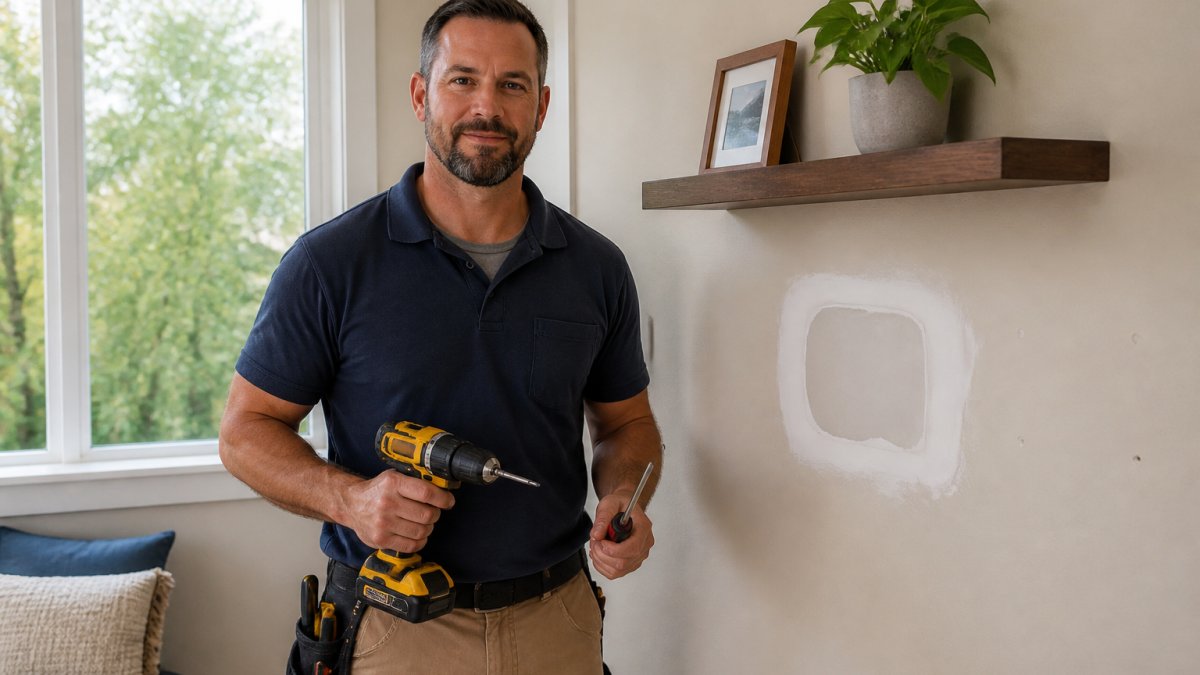
Interior work makes up a large portion of handyman jobs. Drywall patching, filling, sanding, painting, is routine, as are door repairs: sticking doors, hinges, frames, loose handles, and misaligned locks.
Trim, baseboards, shelves, towel racks, and curtain rods are common, along with caulking, weatherstripping, basic painting, and furniture assembly.
Ceiling fan installation, light fixture swaps, outlet covers, switch plates, and minor plumbing like faucet aerators or unclogging drains all fit here.
Interior repairs typically take a few hours and are priced per job.
Exterior Repairs and Maintenance
Outside, handymen handle weather-related fixes and upkeep: gutter cleaning and minor repairs, fence board replacement and post tightening, weatherstripping, caulking, and minor siding repairs.
Deck maintenance, staining, sealing, replacing a board, is handyman work, as are power washing and swapping exterior hardware like house numbers, mailboxes, and light fixtures.
Roof inspection and minor leak identification are possible, but actual roof repair, steep-roof climbing, and structural work belong to a specialist.
Basic Plumbing and Fixture Installation
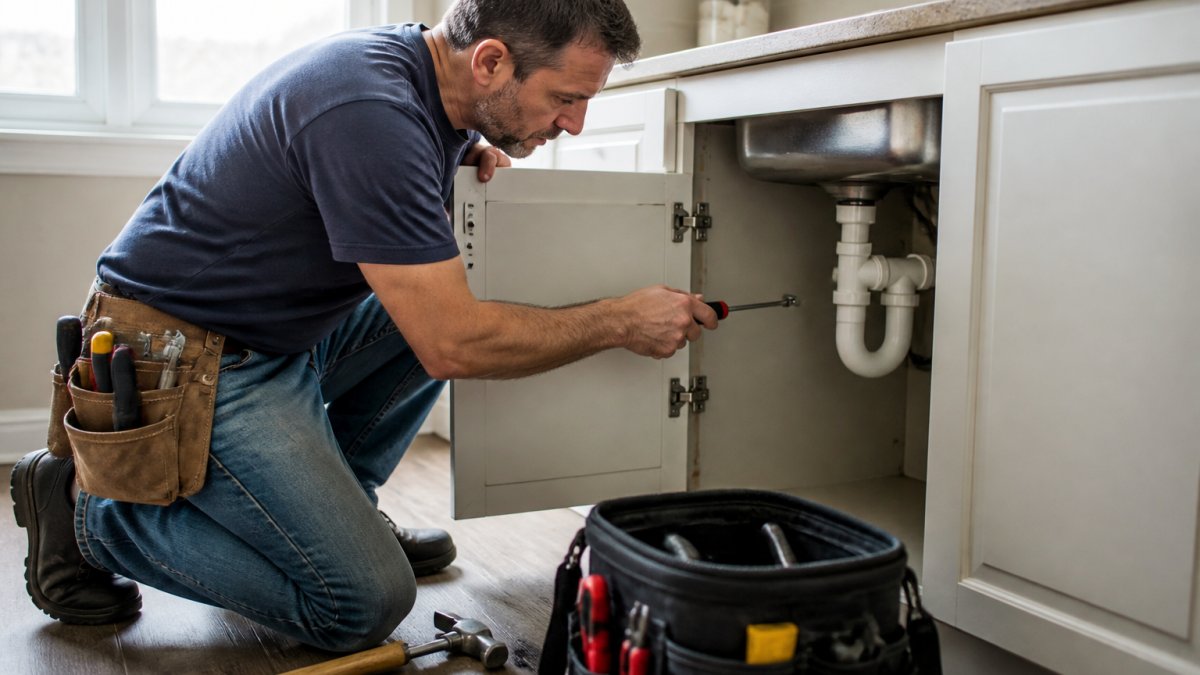
Handyman plumbing stays simple: installing faucets, replacing aerators, fixing leaky handles, unclogging drains, and replacing supply lines under sinks.
Fixture installation, toilets, sinks, showerheads, mirrors, towel bars, is in scope when no structural changes are needed.
Leak detection and minor repairs, a dripping faucet, leaky supply line, slow drain, are handyman territory. Rerouting pipes, main line issues, and new plumbing systems require a licensed plumber.
Handyman Drywall Repair and Wall Patching
Drywall repair is one of the most common handyman tasks. Small holes need simple patching; larger holes take more skill but stay in scope under a certain size.
The process: fill with spackle or joint compound, sand smooth, prime and paint. Larger holes need a patch kit or mesh tape first.
Most handymen patch walls regularly and do quality work; the key is matching paint color and texture, so a good handyman has paint on hand or helps you source the right shade.
Costs vary by hole size. Texture matching adds time and slight cost.
Handyman vs. Contractor for Home Repairs
The line between a handyman and a licensed contractor comes down to four things: whether the work is structural, whether it touches a licensed trade system, whether a permit is required, and how much damage a mistake would cause.
The four filters
1. Structural vs. cosmetic. A handyman can patch drywall, replace trim, hang a door, or rebuild a fence gate.
2. Licensed trade systems. Most states license electricians, plumbers, and HVAC techs, and many municipalities add registration on top.
3. Permits and inspections. Permit triggers vary by jurisdiction but commonly include structural changes, new electrical circuits, water heater replacement, gas appliance connections, roof replacement, and additions.
4. Consequence of failure. A crooked shelf is annoying; a failed supply line floods a floor; a miswired outlet can start a fire; a poorly sealed shower pan can rot a subfloor for years.
A practical decision path
Walk through these in order:
- Does it change the structure or alter anything load-bearing? Hire a licensed contractor.
- Does it involve new wiring, new plumbing lines, gas, or HVAC refrigerant? Hire the matching licensed trade.
- Does your building department require a permit? Hire a licensed contractor who can pull it.
- If it fails, would the damage be expensive, dangerous, or hidden? Lean toward a licensed specialist.
- If all four are no, it is almost certainly handyman work.
Where the line blurs
A few categories sit in the gray zone and depend on local rules:
- Water heater replacement. Often permitted and restricted to licensed plumbers.
- Ceiling fan installation with no existing box or circuit. The fan is simple; the new wiring is not.
- Tile and flooring. Generally handyman-friendly, but verify waterproofing skill in wet areas.
- Appliance installation. A dishwasher or gas range crosses into plumbing or gas work in many jurisdictions.
- Deck repairs. Replacing a board is handyman work; altering framing or the house attachment usually is not.
Cost and risk trade-off
The right question isn't "who is cheaper?" but "who is allowed to do this, and who is on the hook if it goes wrong?"
A well-run handyman company tells you when a job is outside its scope and refers you to the right trade, a feature, not a limitation, that protects your home.
How to Prepare for a Handyman Visit
Clear the work area. Remove items around the repair site and move furniture away from walls being patched. For exterior work, ensure safe access.
Have access ready. Unlock doors, open gates, clear pathways, and ensure safe access to basements, attics, or crawlspaces.
Discuss expectations. Show the handyman the problem, explain your preferred outcome, and ask about their approach.
Ask about timeline. How long will it take? One visit? What if additional issues emerge?
Arrange payment. Confirm pricing and payment options (cash, check, card) before work starts, and clarify when payment is due.
| Preparation Step | Purpose | Timing |
|---|---|---|
| Clear work area | Speed up job, prevent damage | Day before |
| List all issues | Ensure complete visit | Before calling |
| Confirm access | Enable safe entry | Day before |
| Discuss expectations | Prevent misunderstandings | During scheduling |
| Clarify timeline | Plan your schedule | Before visit |
| Arrange payment | No surprises at end | During scheduling |
Estimates, Pricing, and Service Charges
Most handymen charge hourly, a flat fee per job, or a minimum service charge. Flat fees suit routine jobs with clear scope; minimums ensure their time is valued even for quick fixes.
Jobs under an hour may cost the minimum; longer work uses hourly rates or flat fees.
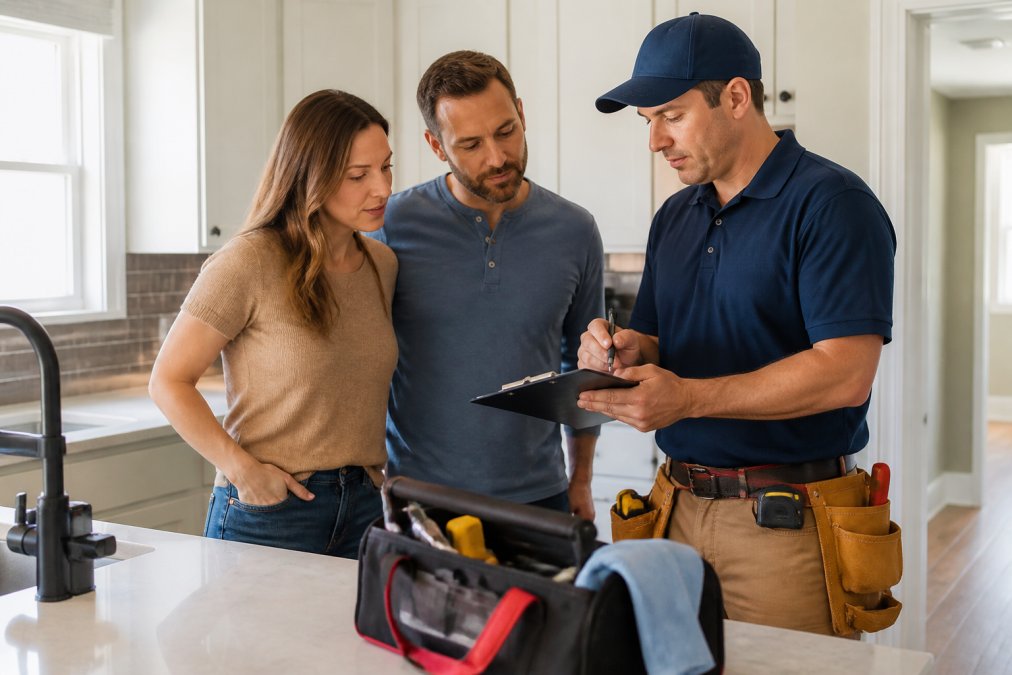
Ask for a written estimate detailing the work, materials, and total cost.
Materials are often separate from labor. Ask whether they're included or charged separately, and clarify any markup upfront.
Pricing depends on job complexity, location, and experience. Both can deliver quality work, but experience usually means speed and fewer mistakes.
Licensing, Insurance, and Safety Considerations
Most states don't require a general handyman license, but the work isn't unregulated. Three buckets matter: trade licensing, business registration, and insurance, each tells you what protection you actually have.
Trade licensing: where the line sits
Electrical, plumbing, and HVAC are state-licensed nearly everywhere, with many cities and counties adding registration on top. A handyman can typically do "repair and replacement in kind", swapping a faucet, replacing a toilet, changing a light fixture on an existing circuit, but not new installation, alteration, or permitted work. The boundary is set by your state licensing board and local building department. When in doubt, call and ask.
Some states also require home improvement contractor registration for residential work above a dollar threshold, even if the work is unlicensed. Verify it separately from trade licensing.
Insurance: the two policies that matter
General liability insurance covers damage the handyman causes to your property, a dropped tool through a window, a scratched floor, a broken fixture. Ask for a current certificate of insurance; a legitimate operator provides it without hesitation.
Workers' compensation insurance covers the handyman or their employees if injured on your property. If an uninsured worker is hurt at your home, you can be exposed to a claim. Sole proprietors may be exempt in some states, ask how they handle it.
Bonding: what it actually does
A surety bond isn't insurance for you, it guarantees the contractor completes the work or compensates you if they don't meet contract terms. Bond amounts are often modest and claims go through the bonding company. Bonding matters most for larger jobs and deposits; for small repairs, insurance matters more.
A task-by-task scope and limitations checklist
Use this as a starting point; local rules can shift any item, so confirm gray-zone tasks with your building department.
Usually handyman work:
- Drywall patching, nail pops, and small hole repair
- Painting touch-ups and small-area repainting
- Door adjustment, hinge replacement, and lock hardware swaps
- Trim, baseboard, and crown molding installation
- Caulking, weatherstripping, and draft sealing
- Furniture assembly and TV or shelf mounting into studs
- Faucet, aerator, and showerhead replacement
- Toilet seat, flapper, and fill valve replacement
- Gutter cleaning and minor gutter repair
- Fence board replacement and gate adjustment
- Light fixture and ceiling fan replacement on existing wiring
- Outlet and switch cover replacement
Depends on local rules, verify first:
- Water heater replacement
- Dishwasher or garbage disposal installation
- Ceiling fan installation where no existing box or circuit exists
- Tile work in wet areas
- Deck board replacement versus deck framing repair
- Minor electrical work beyond fixture swaps
Typically requires a licensed specialist:
- New electrical circuits, panel work, or rewiring
- New plumbing lines, drain relocation, or gas connections
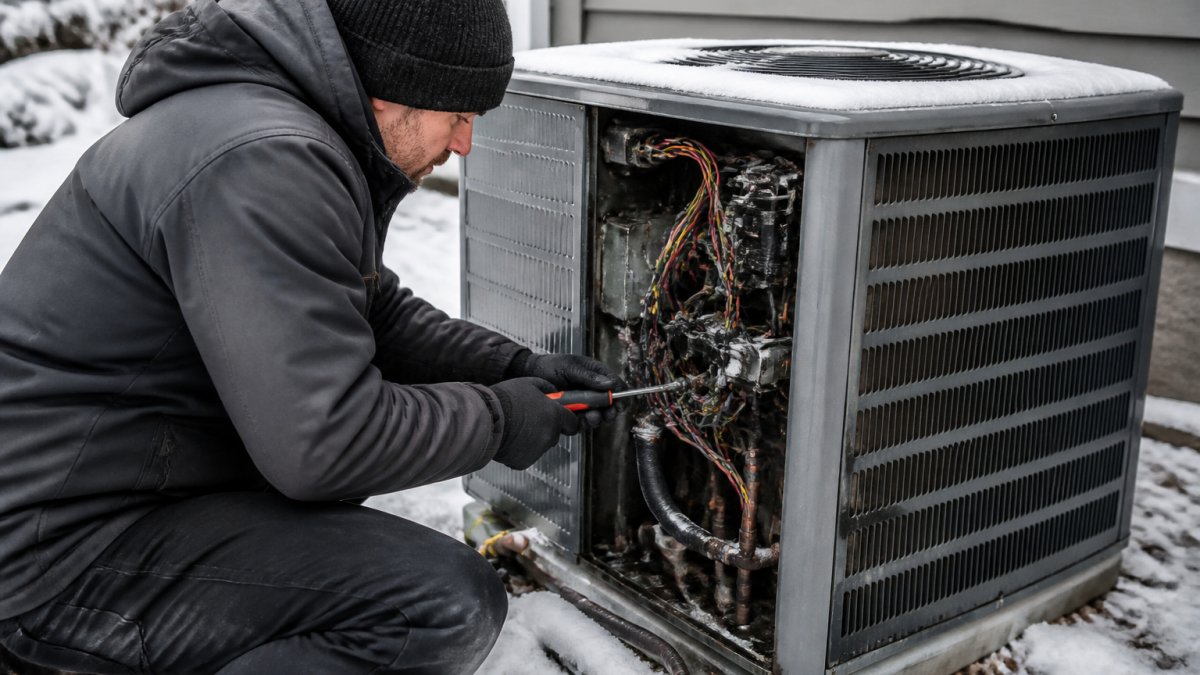
- HVAC installation, refrigerant work, or duct modification
- Structural repairs, wall removal, or load-bearing changes
- Roof replacement or major roof repair
- Anything requiring a building permit
Safety on the job
Safety is about whether the work creates a hazard for you or your home. Watch for three patterns:
- Electrical work without a permit or license. Even small-looking changes can create fire risk if not done to code.
- Water work without shutoff planning. Any plumbing repair should start with knowing where the shutoff is and confirming it works.
- Work at height without fall protection. Gutter, roof, and exterior trim work needs proper ladders, harnesses, and a spotter.
If a handyman skips these safeguards to save time or money, that signals how they handle everything else.
Questions worth asking before you hire
- Are you licensed for this specific work, and can you show the license number?
- Do you carry general liability insurance, and can you provide a certificate?
- Do you carry workers' comp, or are you exempt as a sole proprietor?
- Are you bonded, and for how much?
- Will this job require a permit, and who pulls it?
- Can you provide two or three recent references for similar work?
Legitimate operators answer these directly and in writing.
Frequently Asked Questions
What small home repairs can a handyman handle?
Handymen handle interior repairs like drywall patching, loose hinges, sticking doors, and trim repairs; exterior work such as fence fixing and gutter cleaning; and basic plumbing tasks like fixture installation and leak repairs. Most handyman services focus on minor repairs and maintenance that don't require specialized licensing. For jobs requiring electrical rewiring, gas line work, or structural changes, you'll need a licensed contractor or specialist.
When should I hire a specialist instead of a handyman?
Hire a licensed specialist for electrical rewiring, HVAC system repairs, gas line work, major plumbing jobs requiring rerouting, structural repairs, and work that requires permits or inspections. Handymen can handle light fixture installation or minor plumbing, but complex systems need someone with trade-specific licensing. If a job involves building codes or safety regulations, verify licensing requirements before booking.
How should I prepare for a handyman visit?
Clear the work area of clutter and personal items. Have a list of all repairs or tasks ready, prioritized by urgency. Check that water, gas, and electrical access points are available if needed. Discuss any concerns about your home's layout or previous repairs. Be present or ensure someone is home to answer questions, grant access to locked areas, and approve any scope changes before work begins.
How much does a handyman typically charge?
Handyman pricing varies based on job complexity, location, and materials needed. Most charge hourly rates or flat project fees. For current pricing from M Property Services, request a quote through their website, costs depend on your specific repairs and local factors.