 how-to
HVAC Maintenance Tips for Idaho Winters: 2026 Guide
Table of Contents
- What You'll Need Before Winter Starts
- Why HVAC Maintenance Matters for Idaho Winters
- HVAC Filter Replacement Frequency: Getting It Right
- Step-by-Step HVAC Maintenance Tips for Idaho Winters
- Is Furnace Maintenance Worth the Cost?
- Signs of Furnace Failure Before the First Freeze
- Smart Home Integration and Humidity Control for Winter
- Emergency Troubleshooting and DIY vs. Professional Boundaries
- Frequently Asked Questions
Last Updated: October 2, 2026
What You'll Need Before Winter Starts
Idaho winters punish weak HVAC systems. When temperatures drop below freezing for weeks, your furnace or heat pump runs nonstop. Any small problem becomes a big one fast.
Gather these items before the first freeze:
- Replacement air filters (buy a multi-pack)
- A soft brush and vacuum with a hose attachment
- A flashlight
- A carbon monoxide detector tester
- A caulk gun and foil HVAC tape
- A snow shovel or broom for the outdoor unit
Why HVAC Maintenance Matters for Idaho Winters
Cold snaps push your heating system to its limit. A dirty filter or blocked vent forces it to work harder, raising energy bills and shortening equipment life.
Regular tune-ups deliver three things:
- Lower energy bills through better airflow
- Fewer breakdowns when you need heat most
- Longer equipment lifespan
HVAC Filter Replacement Frequency: Getting It Right
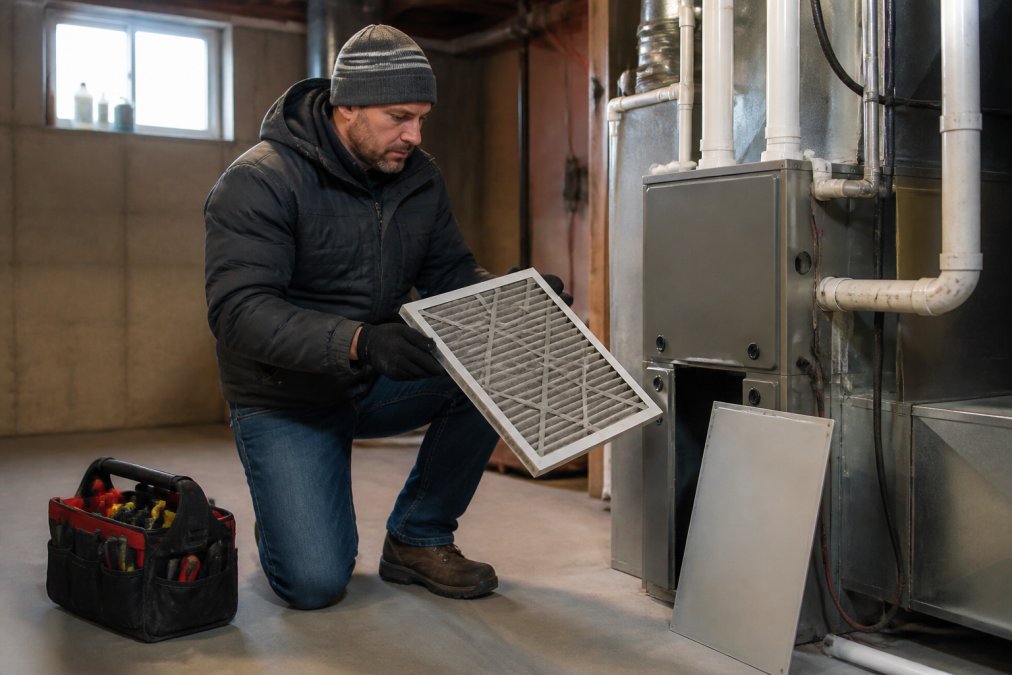
Filter replacement is the cheapest thing you can do for your heating system, and the task most homeowners get wrong. The right schedule depends on filter thickness (MERV rating), how hard the system runs, and your indoor air quality.
Start With the MERV Rating, Not the Calendar
MERV (Minimum Efficiency Reporting Value) runs from 1 to 16 on residential filters. Higher numbers trap more particles but add airflow resistance.
- MERV 1-4 (fiberglass): Captures lint and large dust. Barely slows airflow. Replace every 30 days during heavy winter use.
- MERV 5-8 (standard pleated): The sweet spot for most homes. Traps pollen, mold spores, and pet dander without choking the blower. Replace every 60-90 days.
- MERV 9-12 (high-efficiency pleated): Good for allergy sufferers, but check your furnace manual first. Many residential blowers aren't rated for this much resistance.
- MERV 13-16 (near-HEPA): Traps fine smoke and virus carriers. On most older furnaces, this restricts airflow enough to raise static pressure and shorten blower motor life. Only use if your system is explicitly rated for it.
Why Winter Changes the Math
A furnace running 8-12 hours a day pulls far more air through the filter than an AC running 2-3 hours a day, so a filter that lasts 90 days in July may clog in 45 days in January.
Cold-weather factors that accelerate loading:
- Closed windows and doors. No fresh air dilution means indoor dust, pet dander, and cooking particles recirculate and concentrate.
- Wood stoves and fireplaces. If you burn wood, expect filter life to drop by roughly a third.
- Dry air and static. Low humidity keeps fine particles airborne longer, so more reach the filter.
- Snow tracked indoors. Grit and salt dry into fine dust the return air pulls in.
The Light Test and the One-Inch Rule
Two quick checks beat any calendar:
- The light test. Hold the filter up to a bright bulb. If you can't see light through the pleats, replace it now, regardless of when you last changed it.
- The one-inch rule. A 1-inch cardboard frame means monthly checks in winter. A 4- or 5-inch frame can stretch to every 3-6 months because deeper pleats hold more debris before restricting airflow.
A Simple Winter Schedule
| Filter Type | Normal Interval | Winter Interval (Nov-Mar) |
|---|---|---|
| Fiberglass (MERV 1-4) | 30 days | 30 days |
| Pleated 1-inch (MERV 5-8) | 60-90 days | 30-45 days |
| Pleated 4-5 inch (MERV 8-11) | 6 months | 3-4 months |
| High-MERV (MERV 13+) | Per manufacturer | Check monthly |
Homes with pets, smokers, or anyone with asthma should use the shorter end of every range, as should homes near active construction or areas with frequent winter inversions that trap outdoor particulates.
When a Dirty Filter Becomes a Repair Bill
A clogged filter doesn't just waste energy. It raises the pressure drop across the blower, forcing the motor to run harder and hotter, which can shorten blower motor life by years. On a heat pump, a starved return can also ice up the coil, triggering defrost cycles that dump heat outdoors.
Step-by-Step HVAC Maintenance Tips for Idaho Winters
Work through these steps before the cold settles in. Each takes minutes but prevents costly failures.
Check and Unblock Vents and Registers
Walk through every room and check each register, furniture, rugs, and curtains often block airflow unnoticed.
Inspect and Seal Ductwork
Leaky ducts waste heat before it reaches your rooms. Check exposed ducts in basements and attics for gaps, tears, or loose joints.
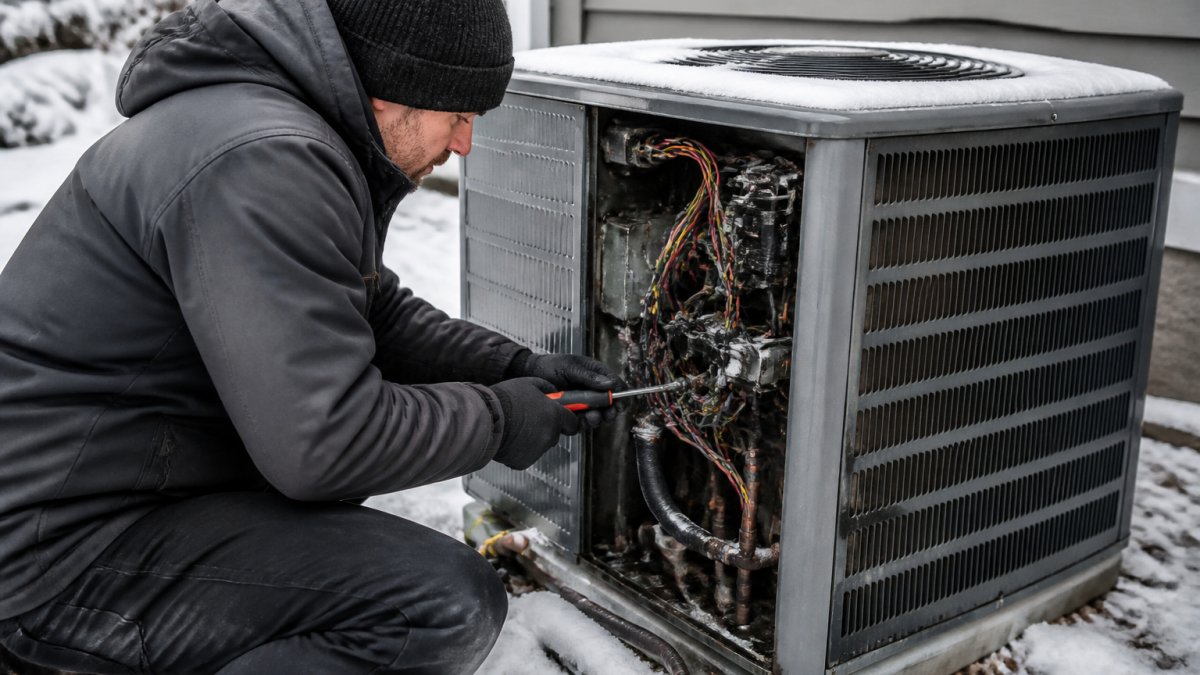
Clear Snow and Ice from Outdoor Units
Heat pumps need airflow to work. Snow and ice smother the outdoor unit and force it to work harder.
Test Carbon Monoxide Detectors
Test every carbon monoxide detector monthly and replace batteries twice a year.
Is Furnace Maintenance Worth the Cost?
M Property Services offers a single point of contact for HVAC, electrical, and handyman work, so one call can handle your furnace tune-up and any related repairs.
Signs of Furnace Failure Before the First Freeze
Catch these warning signs early. Each one points to a problem that gets worse in cold weather.
- Yellow pilot light. A healthy flame burns blue. Yellow means incomplete combustion.
- Strange noises. Banging, rattling, or screeching signals loose or worn parts.
- Weak airflow. Warm air should feel strong at every register.
- Rising energy bills. A sudden jump means the system works harder than it should.
- Frequent cycling. Short on-off cycles strain the system and waste fuel.
- Cold spots. Uneven heating points to duct or airflow problems.
- Odd smells. Musty or burning odors need immediate attention.
Smart Home Integration and Humidity Control for Winter
Most winter HVAC guides stop at "set your thermostat lower when you're away," ignoring how a house behaves in a cold, dry climate, and leaving two of the biggest efficiency levers untouched: smart scheduling and humidity control.
What a Smart Thermostat Actually Does in a Cold Snap
A basic programmable thermostat follows a fixed schedule. A smart thermostat learns your patterns, factors in outdoor temperature, and adjusts run time to hit your target more efficiently, adaptability that matters where overnight lows swing 30 degrees in a week.
Features worth using:
- Geofencing. Uses your phone's location to switch to an away setpoint when the last person leaves and back to comfort before the first returns, avoiding heating an empty house without the recovery-time guesswork of a fixed schedule.
- Adaptive recovery (sometimes called "early start"). Learns how long your furnace takes to raise the temperature and starts the cycle early so you wake up to a warm house instead of a cold one climbing toward the setpoint.
- Auxiliary/emergency heat lockout on heat pumps. The big one for cold climates. Heat pumps switch to expensive resistance heat when they can't keep up; a smart thermostat can delay or limit aux heat, meaningfully cutting winter bills, at the cost of slower recovery.
- Runtime and filter alerts. Tracks how many hours the system has run and nudges you to replace the filter based on actual use, not a calendar.
Humidity: The Lever Most Homeowners Ignore
Cold air holds little moisture. When it's drawn inside and heated, relative humidity drops, often into the teens during a cold snap, causing static shocks, cracking wood floors, gaps in trim, dry sinuses, and the feeling that 68°F is still cold.
Choosing a Humidification Approach
- Portable console humidifiers. Cheapest upfront, good for a single room. You'll refill them daily and clean them weekly to prevent bacterial growth.
- Whole-home bypass humidifiers. Tied into the furnace ductwork. Water evaporates off a pad as warm air passes through. Low maintenance, but output drops as outdoor temperatures fall.
- Steam humidifiers. Boil water to inject steam directly into the duct. Highest output and works regardless of furnace runtime, but they use more electricity and cost more to install.
- Heat pump and furnace-integrated options. Some modern systems pair with a humidifier controlled by the same thermostat, so humidity and temperature adjust together.
Pairing Humidity and Smart Control
A smart thermostat with a humidity sensor triggers the humidifier only when needed, preventing over-humidification on mild days while keeping output high in cold stretches. Some systems tie in an outdoor sensor so the humidity setpoint drops automatically as it gets colder.
What to Check Before You Buy
- Confirm your thermostat wiring (C-wire present or not).
- Check whether your furnace or heat pump is compatible with the smart thermostat's aux-heat controls.
- Decide between a standalone humidity sensor or a thermostat with built-in humidity control.
- For whole-home humidifiers, plan on a professional install, water lines and ductwork are involved.
If you're not sure which setup fits your system, a technician can map your existing wiring and ductwork in one visit and recommend a configuration that won't fight your equipment.
Emergency Troubleshooting and DIY vs. Professional Boundaries
Safe DIY tasks:
- Replacing air filters
- Clearing vents and registers
- Shoveling snow from outdoor units
- Testing carbon monoxide detectors
- Changing thermostat batteries
Call a professional for:
- Any gas smell or suspected leak
- Heat exchanger inspections
- Electrical faults or tripped breakers
- Refrigerant issues
- Blower motor repairs
- Pilot light problems that return
M Property Services handles urgent HVAC repair across Ada and Canyon Counties. When something fails, you get a local team that answers.
Frequently Asked Questions
Do I need my HVAC serviced before winter?
Yes. Scheduling a professional furnace tune-up in early fall catches worn parts, dirty burners, and airflow problems before the heating season starts. A technician will also test carbon monoxide detectors and check the heat exchanger for cracks. Doing this before temperatures drop means you avoid emergency calls during the coldest weeks, when HVAC companies are busiest and wait times stretch longer.
How often should I replace my HVAC filter in winter?
Most 1-inch filters need replacement every 30 to 60 days during heavy winter use. If you have pets, allergies, or run the system continuously, check the filter monthly. Thicker 4-inch media filters can last three to six months, but always follow the manufacturer's recommendation. A clogged filter restricts airflow, raises energy bills, and strains the blower motor, which can lead to costly repairs.
What are the signs of a failing furnace before the first freeze?
Watch for unusual noises like banging or screeching, yellow instead of blue burner flames, frequent system cycling, uneven heating between rooms, and rising energy bills without a change in usage. A pilot light that keeps going out or a furnace that short-cycles are also red flags. If you notice any of these, call a licensed technician before the first hard freeze.
Is furnace maintenance worth the cost?
Annual furnace maintenance typically costs far less than a major repair or emergency replacement. A tuned system uses less fuel, lasts longer, and runs more safely. Maintenance also keeps your manufacturer warranty valid, since most require documented annual service. For homeowners in areas with harsh winters, the avoided emergency call alone often justifies the expense.
Winter in Idaho doesn't forgive a neglected HVAC system. The homeowners who stay warm are the ones who plan ahead, replace filters on schedule, and call for help at the first warning sign. M Property Services makes that easy with licensed HVAC, electrical, and handyman work under one roof, backed by over 30 years of local experience. Get a quote today and head into winter with a system you can trust.