 ultimate-guide
Residential Backflow Testing: A 2026 Guide
Table of Contents
- What Is Residential Backflow Testing?
- Why Backflow Testing Is Required for Homeowners
- How Backflow Prevention Assemblies Work
- Backflow Assembly Testing Requirements Explained
- How Much Does Backflow Testing Cost?
- Scheduling Your Annual Inspection and Compliance
- DIY vs. Professional Certification: What Homeowners Need to Know
- Frequently Asked Questions
Last Updated: September 21, 2026
What Is Residential Backflow Testing?
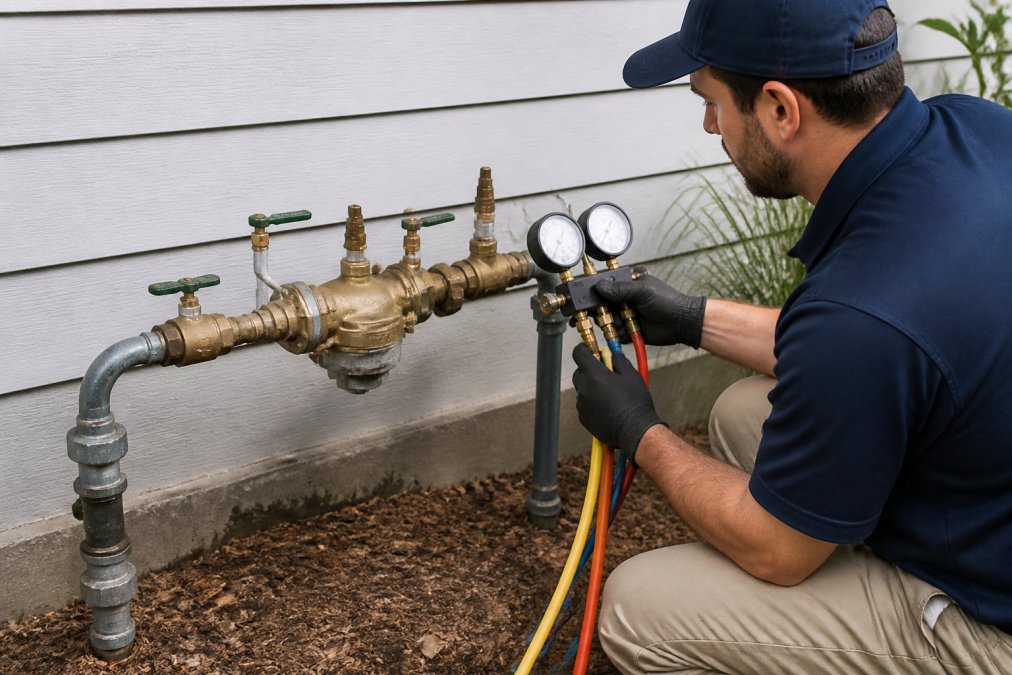
Residential backflow testing is the process of inspecting and certifying that a backflow prevention assembly is functioning correctly to protect your home's water supply from contamination. A backflow prevention assembly is a mechanical device installed on your plumbing system that prevents water from flowing backward into the municipal water supply, a dangerous condition called backflow.
When water pressure drops in the main water line or builds up inside your home's plumbing (back-pressure or back-siphonage), contaminated water can flow backward into the potable water supply, a serious public health risk. Your backflow prevention assembly acts as a one-way gate, allowing water in but blocking reverse flow.
Annual testing is a regulatory requirement in most jurisdictions. A certified tester uses specialized equipment to verify that internal check valves seal properly and the relief valve opens at the correct pressure. Failed assemblies must be repaired or replaced immediately.
At M Property Services, we perform certified backflow testing for homeowners throughout the region. We understand the local plumbing code requirements and ensure your home stays compliant with water district regulations.
Why Backflow Testing Is Required for Homeowners
Backflow contamination poses genuine public health risks. Cross-connections, where potable water lines connect to non-potable sources like irrigation systems, pools, or chemical lines, create pathways for hazardous substances to enter the municipal water system.
Regulatory agencies mandate annual testing to prevent contamination. Failure to maintain current certification can result in penalties, service disconnection, or legal liability.
Testing also protects your family by catching device failures early, before contamination from irrigation systems, hot tubs, or other cross-connections occurs.
Testing applies to most residential properties with irrigation systems, fire suppression systems, or other cross-connections. Check with your water district to confirm your property's specific requirements.
How Backflow Prevention Assemblies Work
A backflow prevention assembly contains internal check valves that respond to pressure changes. Under normal conditions, check valves remain open and create no restriction to water flow.
When pressure drops in the main water line or builds inside your home's system, check valves automatically seal, preventing backward flow into the municipal supply.
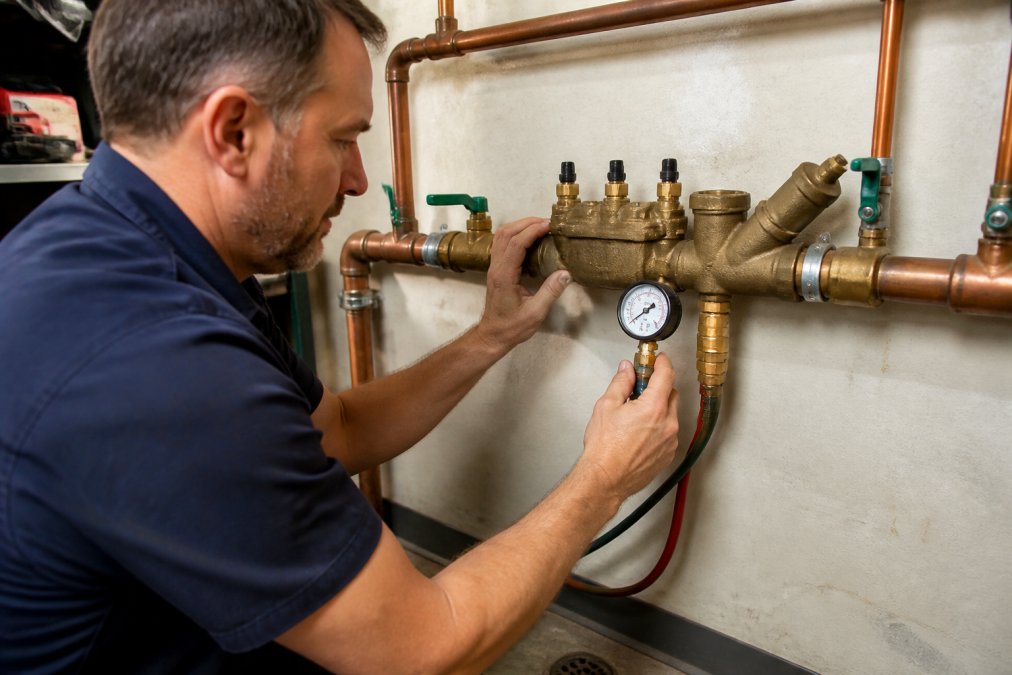
Three common types exist: double check valve assemblies (two check valves in series, suitable for low-hazard cross-connections like irrigation), pressure vacuum breakers (air inlet valve for low-hazard back-siphonage), and reduced pressure principle assemblies (highest protection for high-hazard cross-connections with chemical or biological contamination risk).
The type of assembly required on your property depends on the nature of the cross-connection and local plumbing code. Your certified tester will verify that the correct device type is installed and functioning within manufacturer specifications.
Backflow Assembly Testing Requirements Explained
Annual certification requires a licensed, certified backflow tester to perform formal inspection using calibrated equipment. The tester connects gauges to test ports and verifies that check valves open and close at correct pressure differentials and the relief valve opens at the proper setting.
Testing requires specialized equipment and knowledge of plumbing code standards. A certified tester must hold a valid license demonstrating understanding of pressure dynamics, valve mechanics, and regulatory standards.
After testing, the tester completes a formal report documenting the assembly's condition and certification status, submitted to your water district. Failed assemblies must be repaired or replaced before compliance is restored.
Annual certification is typically required. Some jurisdictions operate on a calendar-year basis (January-December), others on a rolling 12-month cycle. Check your water district's specific requirements.
How Much Does Backflow Testing Cost?
For accurate pricing tailored to your specific situation, including the number of assemblies, device types, and any visible signs of wear, contact M Property Services directly for a detailed quote.
Several factors influence final pricing:
Assembly Type and Complexity
Repair or Replacement Costs
Service Area and Travel
Water District Rebates and Assistance
Bundled Services Bundling testing and repair in a single visit often costs less than scheduling separately and saves a second service call. If repairs are needed beyond the assembly itself, such as plumbing adjustments or fixture work, a handyman can often handle those tasks alongside your testing appointment.
For accurate pricing tailored to your specific situation, including the number of assemblies, device types, and any visible signs of wear, contact M Property Services directly for a detailed quote. We provide transparent estimates upfront and explain any repairs that may be necessary if your assembly fails testing.
Scheduling Your Annual Inspection and Compliance
Staying compliant requires understanding your local testing deadline, aligning testing with your irrigation system's seasonal use, and confirming test results are submitted to your water district.
Understanding Your Testing Deadline
Most water districts require annual certification, but the deadline structure varies. Some districts operate on a calendar-year basis (January 1 through December 31), meaning all tests must be completed by December 31 each year. Others enforce a rolling 12-month requirement, where your test must be performed within 12 months of your previous test date. A few districts allow a grace period of 30-60 days after expiration before issuing a non-compliance notice.
Contact your water district or check your most recent test report to confirm which deadline applies to your property. If you miss the deadline, your property becomes non-compliant, and your water district may issue a violation notice, assess a fine, or, in rare cases, restrict water service until compliance is restored.
Seasonal Timing: Coordinate Testing with Irrigation Cycles
The best time to schedule backflow testing depends on when your irrigation system is active and when you winterize or prepare for seasonal shutdown.
Fall Testing (September-October): Schedule testing before you winterize your irrigation system. This timing allows your system to be fully operational during testing, giving the certified tester a complete picture of how your assembly performs under normal use. After testing passes, you can safely winterize your system for the winter months. This is the most common and recommended timing for homeowners in regions with freezing winters.
Spring Testing (March-April): If you winterized your system in fall, schedule testing again in spring before you restart irrigation for the growing season. This ensures your assembly is certified and functioning before you resume regular water use. Spring testing also catches any damage that may have occurred during winter storage or freeze-thaw cycles.
Year-Round Systems: If your irrigation system runs year-round (common in mild climates), schedule testing during your lowest-use month to minimize disruption. Many homeowners choose late fall or early winter when irrigation demand is lowest.
Avoid Testing During System Shutdown: Do not schedule testing while your irrigation system is winterized or offline. A certified tester needs to verify that your assembly functions under normal operating pressure. Testing a dormant system may produce invalid results.
Compliance Verification Checklist: Ensure Your Test Results Are Submitted
After your certified tester completes the inspection, your responsibility doesn't end. You must verify that the test report is submitted to your water district and that your property's compliance status is updated.
Step 1: Receive Your Test Report Your certified tester should provide you with a copy of the formal test report on the day of testing or within 1-2 business days. The report must include:
- Your property address and account number
- The assembly type and manufacturer
- Test date and tester's license number
- Pass/fail status and pressure readings
- Tester's signature and certification seal
Keep this report for your records.
If you are responsible for submission:
- Contact your water district to learn their preferred submission method (online portal, email, or mail).
- Submit the report within 5-10 business days of testing to avoid delays in compliance recording.
- Keep a copy of your submission confirmation (email receipt, portal timestamp, or certified mail receipt).
Step 3: Verify Compliance Status in Your Water District's System After submission, allow 2-3 weeks for your water district to process and record the test report. Then, log into your water district's online account portal (if available) or call their customer service line to confirm that your property's compliance status has been updated. Your account should show:
- Current certification status: "Compliant" or "Current"
- Test date and expiration date
- Next required testing date
Setting Reminders and Staying Ahead
DIY vs. Professional Certification: What Homeowners Need to Know
You cannot perform your own backflow testing and submit a valid certification to your water district. Only a licensed, certified backflow tester can legally perform this service and sign off on compliance. This is not a task where homeowner knowledge or DIY effort substitutes for professional certification.
Frequently Asked Questions
Why is annual backflow testing required for residential properties?
Backflow testing protects your potable water supply from contamination. Water districts require annual certification to ensure backflow prevention assemblies function correctly and prevent cross-connection hazards. Failing to test can result in water service disconnection and potential health violations under plumbing code standards.
Can I perform residential backflow testing myself?
No. Only certified testers licensed by your water district can perform official backflow testing. Attempting DIY testing won't satisfy regulatory requirements or produce a valid test report for submission to your municipality. Hiring a certified professional ensures compliance and proper documentation of your annual inspection.
What happens if my backflow test fails?
If your backflow prevention assembly fails testing, the certified tester will document the failure in a test report. You'll need to repair or replace the assembly and schedule a retest. Most failures involve worn internal components or pressure issues. A licensed contractor can handle both repair and retesting to restore compliance.
How long does a standard residential backflow test take?
A typical backflow test takes 30 minutes to one hour, depending on assembly type and accessibility. The technician inspects the device, performs pressure and functional checks, and documents results. Scheduling annual inspections early in the year helps avoid rush periods and ensures timely compliance before water district deadlines.
What's the difference between a backflow assembly and a backflow preventer?
A backflow prevention assembly is the complete device installed on your water line, including the preventer mechanism plus test cocks and shutoff valves. Common types include reduced pressure principle assemblies and double check valves. All assemblies contain preventers, but not all preventers are testable assemblies. Certified testing applies to complete assemblies only.
How do I know if my home needs a backflow assembly?
Most homes with irrigation systems, fire sprinklers, or certain plumbing fixtures require backflow protection. Your water district determines this based on cross-connection risk. Contact your local water provider or a certified backflow tester to assess your property. They'll identify hazards and recommend appropriate assembly installation if needed.