 how-to
Do Property Maintenance Companies Handle Small Repairs?
Table of Contents
- What Counts as a Small Repair (and Why It Matters)
- Property Maintenance vs Property Management Services: What's the Difference?
- How Property Maintenance Companies Handle Small Repair Requests
- Average Cost of Handyman Services for Small Repairs
- DIY vs Professional Maintenance: A Decision Matrix
- How to Vet a Property Maintenance Company
- Emergency vs Routine Maintenance: When to Call Right Away
- Conclusion
- Frequently Asked Questions
Last Updated: September 14, 2026
What Counts as a Small Repair (and Why It Matters)
Most homeowners assume "small repair" means "too minor to call a pro." That assumption costs money, time, and sometimes safety. At M Property Services, we've seen that DIY attempts often create the biggest problems later.
A small repair is a non-structural fix requiring minimal materials, limited labor, and typically under two hours of work, dripping faucets, running toilets, loose outlet covers, or a furnace filter swap. These jobs don't need permits, major systems, or heavy equipment.
But here's what most guides miss: "small" describes the scope of work, not the skill required. Replacing a GFCI outlet looks simple until you wire it wrong and create a fire hazard. U.S. Consumer Product Safety Commission electrical safety guidance documents thousands of home electrical fires annually, many traced to amateur repairs.
Common Small Repairs Homeowners Face
The same handful of issues show up again and again:
- Leaky faucets and running toilets - worn washers, faulty flappers, corroded valves
- Electrical issues - dead outlets, flickering lights, tripped breakers
- HVAC problems - weak airflow, unusual noises, thermostat malfunctions
- Minor carpentry - sticking doors, loose cabinet hinges, damaged trim
- Seasonal upkeep - gutter clearing, weatherstripping, caulking gaps
Each is manageable, but each has a failure mode that turns a quick fix into an expensive repair.
Property Maintenance vs Property Management Services: What's the Difference?
These terms get used interchangeably, leading homeowners to call the wrong company. The distinction matters.
Property maintenance covers the physical upkeep and repair of a building and its systems, fixing, replacing, inspecting, and maintaining mechanical and structural elements.
Property management is administrative: tenant relations, leases, rent collection, and vendor coordination for rental owners. They don't swing a hammer, they hire people who do.
| Service Type | Primary Focus | Who It's For | Example Tasks |
|---|---|---|---|
| Property maintenance | Physical repairs and upkeep | Homeowners, landlords | HVAC service, electrical fixes, handyman work |
| Property management | Administration and tenant relations | Rental property owners | Leases, rent collection, vendor coordination |
For a broken outlet or failing water heater, you need a property maintenance company. For tenant screening and lease renewals, you need a property manager. Some companies offer both, but the skill sets differ.
How Property Maintenance Companies Handle Small Repair Requests
A legitimate property maintenance company treats small repairs with the same process discipline as large ones. Job size changes the timeline, not the workflow.
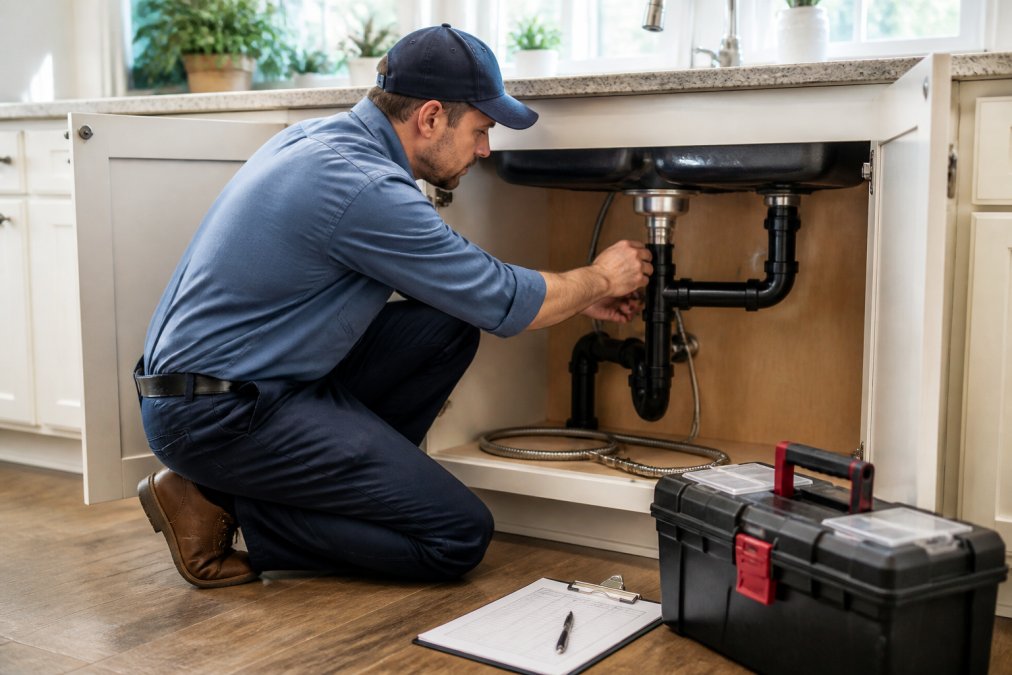
When you call M Property Services for a small repair, you enter a system built to prevent the two biggest frustrations homeowners report: no-shows and surprise charges.
Step-by-Step: From Work Order to Completion
- You submit a repair request - by phone, online form, or maintenance portal.
- The company creates a work order - a tracking document that follows your job from intake to completion.
- A technician is scheduled and dispatched - you receive confirmation with a time window.
- On-site diagnosis happens first - the technician confirms the problem before starting work.
- You approve the repair and cost estimate - no work proceeds without your sign-off.
- The repair is completed - typically same-day for small jobs.
- Follow-up and documentation - you receive a record of what was done, useful for warranty claims or future sales.
Average Cost of Handyman Services for Small Repairs
Pricing for small repairs varies by region, trade, and complexity, so any single "average cost" figure deserves skepticism. What matters is how companies structure pricing and where hidden costs appear.
Most property maintenance companies use one of three pricing models:
- Hourly rates - you pay for time plus materials. Best for unpredictable jobs, but the clock starts when the technician leaves the shop.
- Flat-rate pricing - a set price per task from a published price book. Best for standard repairs like outlet replacement.
- Service call minimums - a base fee covering travel and the first 30 to 60 minutes. Anything beyond bills at the hourly rate.
The Markup Nobody Puts in the Ad
When a maintenance company buys a part on your behalf, it typically adds a markup before billing you. That markup isn't a scam, it covers sourcing time, warranty handling, and inventory risk, but it's rarely disclosed upfront. A common pattern is 15% to 30% on parts, sometimes higher on specialty items (angi.com).
Management fees work the same way on rentals: a property manager coordinating a small repair may charge a coordination fee or percentage markup on the contractor's invoice. Owners who don't ask are often surprised when a $180 repair shows up as $240.
Ask three questions before you approve any work.
- Is the diagnostic or trip fee separate from the repair cost? If yes, what do you owe if you decline the repair?
- Is there a markup on parts, and if so, what percentage? A straight answer here tells you a lot about the company.
- Is the quoted price all-in, or can line items be added after the work starts? Get the answer in writing.
A reputable company answers all three without hesitation.
What Actually Drives the Price of a Small Repair
Four variables move the number most:
- Access and location - a faucet under a cluttered sink takes longer than one in an empty cabinet. Attic and crawlspace work carries a premium.
- Parts availability - a standard flapper is a hardware-store item; a discontinued valve may need ordering, adding days and shipping.
- Trade licensing - electrical and gas work require a licensed technician, costing more per hour than general handyman labor.
- Time of day - after-hours and weekend calls typically carry a surcharge, often 1.5x the standard rate (homeadvisor.com).
M Property Services provides quotes before work begins, so you know the cost before approving anything. For current pricing on specific repairs, request a quote directly.
DIY vs Professional Maintenance: A Decision Matrix
Not every small repair needs a professional. The trick is knowing which is which before you start, not after you've made things worse.
| Situation | DIY | Call a Professional |
|---|---|---|
| Cosmetic fixes (paint, caulk, weatherstripping) | Yes | No |
| Replacing a furnace filter | Yes | No |
| Unclogging a drain with a plunger | Yes | No |
| Electrical work beyond swapping a bulb | No | Yes |
| Anything involving gas lines | No | Yes |
| HVAC refrigerant or compressor issues | No | Yes |
| Water damage or suspected mold | No | Yes |
| Work requiring a permit | No | Yes |
Three questions decide it:
- Does this involve a system that can hurt someone if done wrong? Electrical, gas, and structural work always go to a professional.
- Will a mistake void a warranty or insurance claim? Unpermitted or improper work can do both.
- Do I have the right tools and the actual skill? Watching a video isn't the same as having done the job before.
The DIY-versus-professional calculation isn't about saving money on the repair, it's about the cost of fixing a failed DIY attempt, which is almost always higher.
How to Vet a Property Maintenance Company
Vetting a property maintenance company comes down to three things: licensing, insurance, and accountability. Everything else is marketing. Those three are the difference between a repair that's covered and one that becomes your problem.
- Confirm the company holds current state and local licenses for each trade it offers
- Ask for a certificate of insurance showing general liability and workers' compensation coverage
- Verify the business registration and check for complaints with your state's consumer protection office
- Request references from jobs similar to yours
- Get the scope of work and pricing in writing before work begins
- Confirm whether the company uses in-house technicians or subcontracts
That last point matters: a company using in-house teams controls quality, scheduling, and accountability directly. A company that subcontracts every job is really a dispatcher.
Licensing, Insurance, and Liability for Small Repairs
Even a small repair carries liability exposure for both parties, the part most guides gloss over.
If an uninsured contractor is injured in your home, your homeowner's insurance may cover medical bills and lost wages. Workers' compensation coverage protects you from that exposure. If the company can't produce a certificate of insurance, you're the insurer of last resort.
If a repair causes damage later, an unlicensed contractor leaves you little recourse. Your insurer may deny a claim for damage from unpermitted or unlicensed work, you pay twice: once to the handyman, again to fix what they broke.
If the work required a permit and didn't get one, the problem can surface at resale. A home inspector or buyer's lender may flag unpermitted electrical, plumbing, or structural work, and the cost of correcting it falls on you.
A common pattern in the trades: the smaller the job, the more likely an owner skips the license check. That instinct is backwards. Small electrical and gas jobs are exactly where unlicensed work creates the largest downstream risk, because the failure mode is fire or carbon monoxide.
M Property Services is fully licensed, bonded, and insured across multiple trades, including Backflow Assembly Tester License 4271842 and Electrical Installer ELE-SJ-20028. That matters because it means one company carries the accountability for the work, rather than you chasing down separate contractors when something goes wrong.
How to Verify a License in Practice
Do not take a license number on a business card at face value. Verify it directly:
- Look up the license number in your state's licensing board database. Most states publish this online and free.
- Confirm the license is active, not expired or suspended, and that it covers the specific trade being performed.
- Check that the technician doing the work holds the relevant license, not just the company owner. In many states, the individual performing electrical or HVAC work must be licensed separately.
- Ask for the certificate of insurance directly from the insurer, not a photocopy the company provides.
Emergency vs Routine Maintenance: When to Call Right Away
Some repairs can wait for a scheduled appointment; others can't. Knowing the difference prevents panic calls and costly delays.
Call immediately for:
- No heat in winter or no cooling in extreme heat
- Sparking outlets, burning smells, or repeated breaker trips
- Active water leaks or flooding
- Sewage backups
- Gas odors of any kind
Schedule within a few days for:
- Dripping faucets and slow drains
- One dead outlet with no burning smell
- Running toilets
- HVAC making unusual but non-urgent noises
- Cosmetic damage
The line isn't always obvious: a single dead outlet is routine, but one warm to the touch is an emergency. When in doubt, treat electrical and water issues as urgent, the downside of waiting far outweighs an after-hours call.
Conclusion
The gap between a small repair and a major problem is usually one bad decision: waiting too long, hiring the wrong person, or attempting work that needed a licensed trade. Getting it right the first time costs less than fixing it the second.
M Property Services handles small repairs across Ada and Canyon Counties with licensed, insured technicians and upfront pricing. As a local, family-owned business with over 30 years of experience, we cover electrical, HVAC, handyman, and backflow testing under one roof, simplifying home upkeep with a single, trusted point of contact. Request a quote and get your repair handled by a team that shows up when it says it will.
Frequently Asked Questions
Does a property management company pay for repairs out of their own pocket?
No. Property management companies coordinate repairs and may front the cost for urgent work, but the property owner ultimately pays. The management company typically deducts repair expenses from rental income or bills the owner directly. For homeowners hiring a maintenance company for small repairs, you pay the provider directly. Always confirm who pays before work begins, and ask for a written estimate so there are no surprises on the final invoice.
How do property maintenance companies charge for small, one-off repairs?
Most charge a minimum service call fee plus parts and labor, or a flat rate per task. Some bundle small repairs into an hourly rate. Pricing depends on the type of repair, your location, and whether parts are needed. Ask upfront whether there is a trip charge and whether the minimum covers the first hour. Request a written estimate before approving work so you know the total out-of-pocket expense.
Are handyman services included in standard property maintenance contracts?
It depends on the contract. Some maintenance agreements cover routine maintenance like filter changes and seasonal tune-ups but exclude one-off handyman tasks. Others include a set number of small repairs per year. Read the service level agreement carefully. If small repairs are not included, ask whether they can be added or billed separately. A reputable provider will explain exactly what is covered before you sign.
How do I verify a property maintenance company is licensed and insured?
Ask for license numbers and certificate of insurance, then verify them with your state or local licensing board. For electrical, HVAC, and plumbing work, licenses are typically required. Check that the company carries general liability and workers compensation coverage. If something goes wrong during a small repair, proper licensing and insurance protect you from liability. A trustworthy company will provide these documents without hesitation.