 comparison
Is Furnace Maintenance Worth the Cost?
Last Updated: November 4, 2026
Quick Summary
For most homeowners, furnace maintenance is worth the cost, but the math depends on the furnace's age, fuel type and condition. A tune-up tends to pay off by catching small problems early, helping prevent emergency repairs during cold snaps, and supporting a longer system lifespan.
- Furnace maintenance is a scheduled inspection, cleaning and adjustment, usually done once a year before heating season.
- Compare the annual service cost against expected repair avoidance, energy savings and equipment lifespan.
- Repair avoidance matters most if your furnace has needed two or more repairs in recent years.
- Be skeptical of any provider promising a specific percentage cut in energy bills from a tune-up alone.
- Read maintenance plan terms on visit limits, parts coverage, exclusions and auto-renewal before signing.
Table of Contents
- What Furnace Maintenance Actually Covers
- What a Furnace Tune-Up Costs and What Affects the Price
- The Real Math: Weighing Service Fees Against Repair and Energy Savings
- How Often to Service a Furnace by Age, Fuel Type and Condition
- Furnace Tune-Up Checklist: What a Technician Should Inspect
- Maintenance Plans vs. One-Time Tune-Ups: Comparing the Contracts
- Booking Your Next Furnace Service Visit
- Frequently Asked Questions
Is furnace maintenance worth the cost? For most homeowners, the answer is yes, but the math depends on your furnace's age, fuel type and condition. M Property Services has served homeowners across the Treasure Valley for more than 30 years. This guide breaks down what a tune-up covers, what it typically costs, and how to weigh that expense against the repairs and energy bills it may prevent.
Furnace maintenance is a scheduled inspection, cleaning and adjustment of your heating system, usually done once a year before the heating season begins. The goal is to catch small problems before they become expensive breakdowns. Many homeowners treat it as optional until the first cold snap leaves them without heat, and that is exactly when the real cost shows up.
What Furnace Maintenance Actually Covers
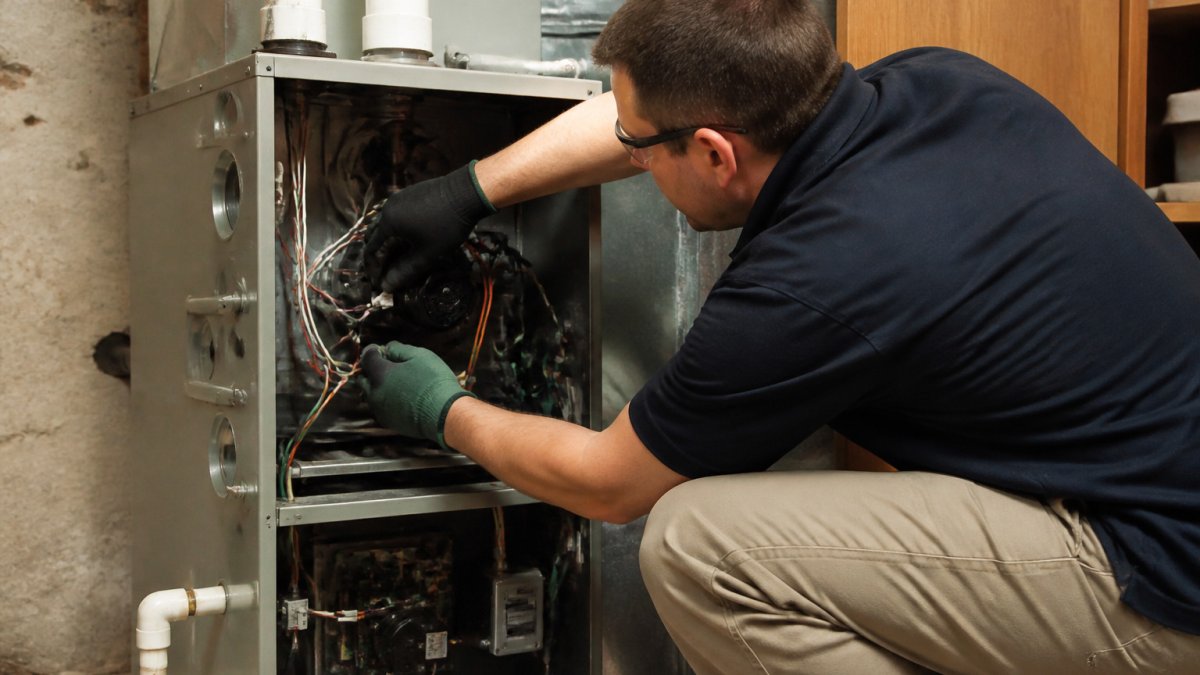
A standard furnace tune-up is more than a quick look at the unit. See exactly what a furnace tune-up includes on our local service page.
Homeowners can usually swap their own furnace filter between service visits, which is one of the simplest maintenance tasks available.
What a Furnace Tune-Up Costs and What Affects the Price
Prices for a tune-up vary by region, furnace type and the scope of work. Pricing for M Property Services depends on the specific system and service needed, so contact us directly for a current quote. Public pricing benchmarks can help set expectations. HVAC maintenance cost benchmarks lists standard annual visits for residential heating systems, and HVAC tune-up pricing guide outlines typical per-service ranges, which tend to rise when a unit is older or harder to access.
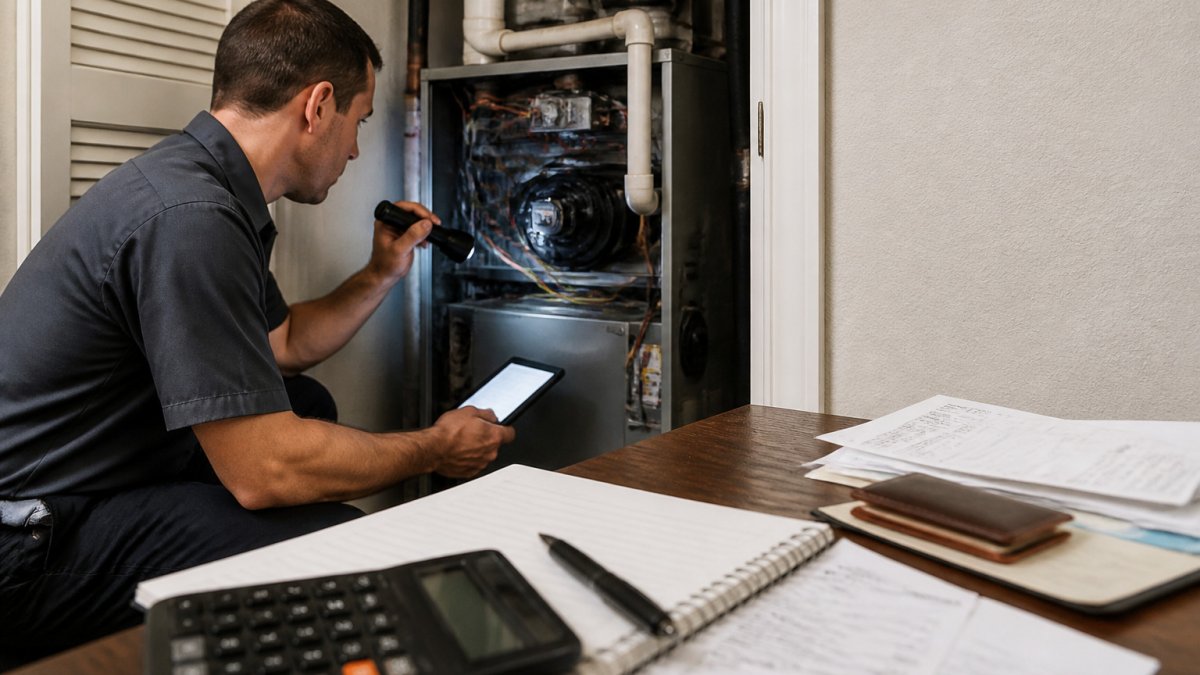
Several factors can shift the price, including the fuel type and how accessible the unit is.
The Real Math: Weighing Service Fees Against Repair and Energy Savings
The core question is whether the annual service fee is less than the expected cost of the problems it prevents. Compare repairing and replacing your furnace to see which path fits your situation. That expected cost is hard to pin down, because it depends on how often breakdowns occur and what they cost to fix. Rather than quote a single savings figure, it helps to build the comparison in four parts and adjust each one to your own system.
Part 1: The annual service cost. A one-time tune-up is a known, fixed expense. A maintenance plan spreads a similar total across the year but adds a recurring commitment. Either way, write down the real annual number before comparing it to anything else.
Part 2: Expected repair avoidance. This is the hardest part to estimate, and it is where most marketing claims overreach. A failed igniter, flame sensor or blower motor can run into hundreds of dollars, and an emergency call during a cold snap often costs more than a scheduled visit. But maintenance does not prevent every failure, it catches some problems early and leaves others untouched. A realistic approach is to ask how many repairs your furnace has needed in the last three to five years. If the answer is zero on a newer unit, the repair-avoidance value is low. If the answer is two or more on an aging unit, the expected value rises sharply.
Part 3: Energy savings. A clean, properly adjusted furnace burns fuel closer to its designed efficiency. Department of Energy guidance on heating system efficiency explains that regular upkeep helps heating equipment run as intended, though exact savings vary by system and home. Be skeptical of any claim that a tune-up alone will noticeably cut monthly bills on a newer, well-sized furnace. The efficiency case is strongest for older systems that have gone years without service, dirty burners or restricted airflow.
Part 4: Equipment lifespan. The largest dollar figure in the calculation is usually the one homeowners never see: the cost of replacing a furnace years earlier than necessary. A well-maintained system tends to reach the end of its service life closer to its rated lifespan, while a neglected one may fail sooner. Spreading a replacement cost across an extra few years of service is often where maintenance pays for itself, even when the annual energy savings are modest.
Put the four parts together and a pattern emerges. On a newer, trouble-free furnace, the case for maintenance rests mainly on warranty compliance and safety checks, not on dramatic savings. On an aging or frequently repaired furnace, the repair-avoidance and lifespan pieces carry most of the weight. The honest answer to "is it worth the cost" is that it depends on which of these four buckets is largest for your system, and that is a question a technician can help you answer after an inspection.
Watch out: any provider who promises a specific percentage reduction in energy bills from a tune-up alone is overselling. Efficiency gains vary by system age, fuel type and home.
How Often to Service a Furnace by Age, Fuel Type and Condition
Most homeowners should schedule a furnace service once a year, ideally in early fall before the heating season starts. Learn when to call for furnace repair service if your unit is showing warning signs.
Some situations call for more attention. An older furnace, one that has needed recent repairs, or a unit that runs noisily or cycles on and off often benefits from closer monitoring. Homes with pets or heavy dust may also need more frequent filter changes, which you can handle between professional visits.
Fuel type affects what to expect. Gas furnaces need checks on burners and gas connections, while oil furnaces require nozzle, filter and combustion adjustments. Your service technician can tell you which schedule fits your system.
Furnace Tune-Up Checklist: What a Technician Should Inspect
A thorough tune-up should cover the following items. Use this list to confirm your technician is checking the essentials:
- Burner and igniter inspection and cleaning
- Flame sensor cleaning and testing
- Blower motor, belts and bearings checked
- Heat exchanger inspected for cracks or corrosion
- Safety controls and limit switches tested
- Gas or oil connections checked for leaks
- Thermostat operation verified
- Combustion and system performance measured
- Air filter condition reviewed or replaced
Some homeowners can handle simple tasks such as replacing the air filter, keeping the area around the furnace clear and checking that vents are unobstructed.
Maintenance Plans vs. One-Time Tune-Ups: Comparing the Contracts
Many companies offer annual maintenance agreements alongside one-time visits. Compare a service contract with a one-time repair visit side by side before you decide. The right choice depends less on the headline price than on the contract terms buried in the fine print. A plan is only worth its recurring fee if the terms match how you actually use your system, so read every agreement against the checklist below before you sign.
Visit limits. Confirm how many service visits the plan includes per year and whether a "visit" means a full tune-up or a shorter inspection. Some plans count diagnostic calls against the same allowance, which can leave you short if something breaks mid-season.
Repair discounts and parts coverage. Many plans advertise a percentage discount on repairs, but the discount often applies to labor only, not parts. Ask specifically whether common wear items, igniters, flame sensors, blower motors, capacitors, are covered or discounted, and whether there is a cap on the discount per visit or per year.
Priority service. Priority scheduling is one of the most valuable plan benefits during a cold snap, when service queues stretch for days. Confirm what "priority" actually means: a guaranteed response window, a separate phone line, or simply a place ahead of non-plan customers with no time commitment.
Exclusions. Every plan has them. Look for language excluding pre-existing conditions, rust or corrosion, code upgrades, and repairs needed because of neglected filters. An exclusion that covers the most likely failure on your system can erase most of the plan's value.
Cancellation and auto-renewal. Check the cancellation window, any early-termination fee, and whether the plan renews automatically at a higher rate after the first year. A plan that auto-renews at an increased price without a reminder is easy to overlook.
Price escalation. Ask whether the annual fee is locked or rises over time, and whether the increase is capped. A plan that looks reasonable in year one can become expensive by year three.
Here is how we would weigh the decision:
- Choose a one-time tune-up if your furnace is newer, has no history of problems and you want to avoid a recurring commitment.
- Consider a plan if your furnace is aging, you have needed emergency calls before, or you value guaranteed scheduling during peak season, and only after confirming the visit limits, repair discounts and exclusions fit your system.
Booking Your Next Furnace Service Visit
If you are unsure whether your furnace is due for service, start with a simple inspection. M Property Services provides HVAC services across Ada and Canyon Counties. You can schedule your furnace service visit whenever it suits your calendar.
For homeowners weighing ongoing care against a larger repair, we are also happy to talk through the options. If a broader fix around the home is needed alongside your heating work, our Handyman team can take on smaller repairs and odd jobs. Reach out to request a quote, and we will give you a clear picture of what your furnace needs.
Frequently Asked Questions
Do you really need to have your furnace serviced every year?
Most manufacturers and HVAC professionals recommend an inspection and tune-up once a year, ideally before the heating season starts. Annual service checks the burners, heat exchanger, ignition, and safety controls, which are the parts most likely to fail or become unsafe over time. A yearly visit is not legally required for most homes, but skipping it can void some warranties and makes it harder to catch problems early. Homeowners with newer, well-maintained systems may space visits further apart, while older or heavily used furnaces benefit from the yearly schedule.
What is the average cost to service a furnace?
Prices for a furnace tune-up depend on the region, the fuel type, and the complexity of the unit. Prices vary by company and by whether the visit includes additional cleaning or a multipoint safety test. Because rates change and depend on local labor costs, the most reliable way to get a current figure is to request a written quote from a licensed technician. Ask what the quote includes so you can compare visits accurately.
Is a furnace maintenance plan worth it?
A maintenance plan can be worth it if it bundles an annual tune-up with priority scheduling or discounted repair labor, and if you expect to use those benefits. Compare the plan's annual fee against the cost of a single tune-up and the typical repair bill for your system. Read the contract for what is excluded, how repairs are priced, and whether you can cancel. You do not need a plan to get service: a one-time tune-up works just as well for homeowners who prefer to pay as they go.
Does furnace maintenance help prevent breakdowns?
Regular maintenance catches many of the problems that cause furnaces to fail in the middle of winter, including worn igniters, clogged burners, and failing blower components. Cleaning and inspection do not prevent every breakdown, since some components wear out regardless of care. Still, a maintained furnace is less likely to stop working at the worst possible time, and technicians can flag safety issues such as cracked heat exchangers or carbon monoxide risks before they become emergencies.