 listicle
Benefits of Hiring One Property Maintenance Company
Table of Contents
- Why One Property Maintenance Company Beats Juggling Multiple Contractors
- Your Property Maintenance Services Checklist: What a Full-Service Provider Handles
- Cost of Professional Home Maintenance vs DIY: What Actually Saves Money
- How to Choose a Reliable Home Repair Contractor
- Safety, Code Compliance, and Liability Reduction
- Technology Integration and Modern Maintenance Management
- Long-Term ROI: How Consistent Property Upkeep Protects Your Home's Value
- Conclusion
- Frequently Asked Questions
Last Updated: September 20, 2026
Why One Property Maintenance Company Beats Juggling Multiple Contractors
The benefits of hiring one property maintenance company start with a simple shift: you stop managing a rotating cast of tradespeople and start managing your home. At M Property Services, we have watched homeowners across Ada and Canyon Counties spend evenings chasing electricians, HVAC techs, and handymen who never coordinate with each other. One provider fixes that.
Your Property Maintenance Services Checklist: What a Full-Service Provider Handles
A full-service property maintenance provider handles routine repairs, seasonal upkeep, and emergency calls under one account. The exact scope varies, but most homeowners should expect coverage across the trades that keep a house safe and running.
Seasonal and Routine Tasks to Expect
A working maintenance schedule usually includes:
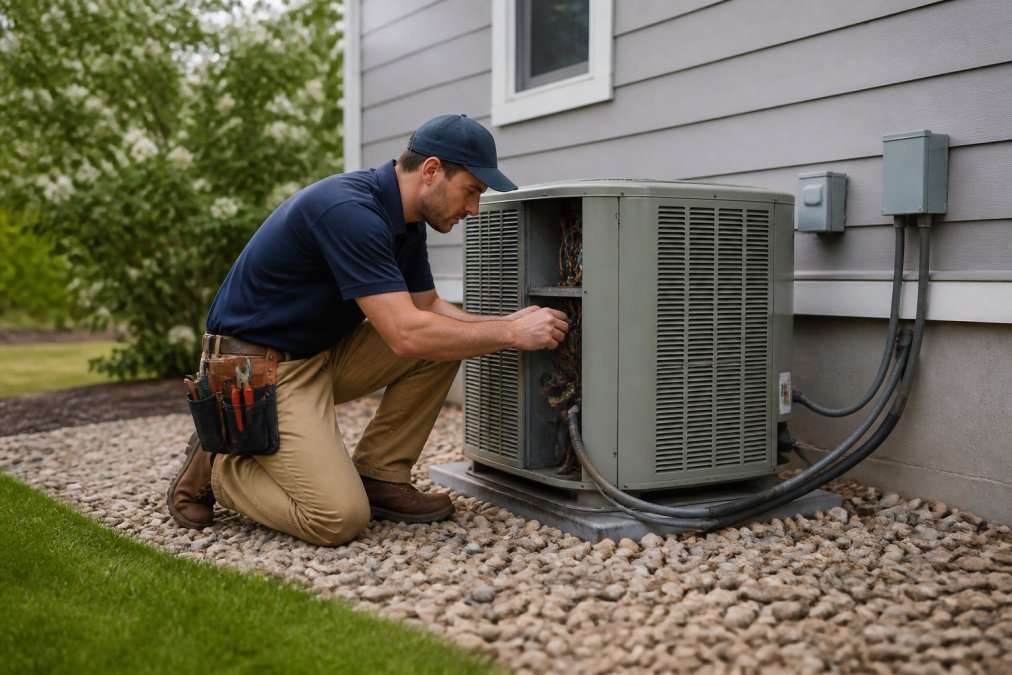
- HVAC filter changes and seasonal tune-ups
- Electrical inspections and outlet or fixture repairs
- Gutter clearing, caulking, and weatherproofing
- Backflow testing where local code requires it
- General handyman work: doors, drywall, fixtures, trim
Emergency and On-Call Services
Emergency response is where a single provider earns its keep. When a furnace dies in January or a circuit trips repeatedly, you want one number that answers. Ask any provider how after-hours emergency calls work before you sign. A clear service level agreement beats a vague promise.
Cost of Professional Home Maintenance vs DIY: What Actually Saves Money
The cost of professional home maintenance versus DIY depends less on the hourly rate and more on what a mistake costs you. DIY wins on small, low-risk fixes. Professional service wins the moment a repair touches electrical, gas, or refrigerant systems, and it wins decisively once you account for the hidden line items most homeowners never put on paper.
The Three Costs DIY Hides From You
1. Your time, priced honestly. A Saturday spent replacing a garbage disposal is a Saturday you did not spend on billable work, family, or rest. If your effective hourly rate is $40 and the job eats six hours including the trip to the hardware store, you have already spent $240 before buying a single part.
Where a Single Provider Actually Reduces Cost
Cost mitigation comes from prevention and from consolidating vendors, not from doing everything yourself. Three mechanisms do most of the work:
- Preventative maintenance extends equipment life. A tuned HVAC unit runs less often and lasts longer. A sealed exterior keeps water out of the walls, where it would otherwise rot framing and invite mold. Those are capital improvements disguised as routine upkeep.
- One account means one trip charge. When a single company handles HVAC, electrical, and handyman work, a technician who is already on site can address a second issue in the same visit instead of you paying a separate dispatch fee to a second trade.
- Volume pricing on recurring work. Providers that hold your annual maintenance contract can often fold small repairs into scheduled visits rather than billing them as standalone emergency calls.
The Insurance Math Nobody Runs
A bonded, insured provider carries general liability and workers' compensation coverage. If a technician is injured on your property, that coverage responds. If you hire an uninsured handyman and he falls off your ladder, the claim lands on your homeowner's policy.
A Simple Way to Decide
Run the job through three questions before you pick up a tool:
- Does it touch electrical, gas, refrigerant, or structural elements? If yes, hire it out.
- Will a mistake create a safety hazard or a code violation? If yes, hire it out.
- Is the total DIY time, including research, trips, and cleanup, worth more than the quoted labor? If yes, hire it out.
How to Choose a Reliable Home Repair Contractor
Choosing a reliable home repair contractor comes down to verification, not personality. A contractor who is pleasant but uninsured is a liability. Check the paperwork first, then judge the work.
Licensing, Insurance, and Verification Steps
Before hiring anyone, confirm:
- Active state or local license for each trade they perform
- General liability insurance and workers' compensation coverage
- Bonding, where your jurisdiction requires it
- Written estimates that separate labor and materials
- References from jobs similar to yours
Ask for license numbers and verify them with the issuing authority. A legitimate contractor expects this and will not hesitate.
Questions to Ask Before You Sign Anything
- Who is my point of contact for scheduling and billing?
- What is your response time for emergency calls?
- Do you subcontract, and if so, who vets those subs?
- What does your warranty cover, and for how long?
Safety, Code Compliance, and Liability Reduction
Code compliance is not paperwork; it is the difference between a covered claim and an uncovered one. Local regulatory standards govern everything from electrical panels to backflow prevention, and a licensed provider keeps your home on the right side of them.
EPA guidance on safe drinking water and backflow prevention
Technology Integration and Modern Maintenance Management
Technology integration is the angle most homeowners overlook, and it changes how a maintenance relationship actually feels. Modern providers use scheduling software, digital service records, and photo documentation to track every visit to your home.
Long-Term ROI: How Consistent Property Upkeep Protects Your Home's Value
Consistent property upkeep protects home value because buyers pay for systems with documented care, not just curb appeal. Property value reflects the whole property lifecycle, and deferred maintenance shows up at inspection. But the ROI story only holds if you can actually prove the care happened, and that is where most homeowners, and most articles on this topic, stop short.
Why Documentation Is the Real Asset
A home with a service history signals to buyers and inspectors that the property standards were maintained. That translates into fewer repair negotiations and a faster sale. Occupancy rates matter for rentals the same way: tenants stay longer when repairs get handled quickly, which shortens vacancy cycles and protects income.
The Vetting Checklist That Protects the ROI
Before you hand a provider the keys to your largest asset, verify these items. This is the step most homeowners skip, and it is the one that determines whether the ROI materializes.
- Active license for each trade they perform, verified with the issuing authority, not just a number on a business card
- General liability insurance with a certificate you can request and confirm with the carrier
- Workers' compensation coverage, without it, an on-site injury becomes your liability
- Bonding, where your jurisdiction requires it
- Written estimates that separate labor from materials
- References from jobs similar in age and type to your property
- A named point of contact for scheduling, billing, and escalations
- A written warranty stating what is covered and for how long
How Technology Turns Maintenance Into Evidence
Technology integration is the angle most homeowners overlook, and it is what separates a modern provider from a handyman with a truck. Modern maintenance companies use scheduling software, digital service records, and photo documentation to track every visit to your home.
The Long-Term ROI, Stated Plainly
The long-term ROI of professional upkeep is not a single number. It is the sum of systems that last longer, claims that get covered, a sale that does not stall over a failed inspection, and a documented history that answers the buyer's questions before they are asked. The providers who deliver that are the ones who pass the vetting checklist above, and the ones who can show you the records to prove it.
Conclusion
Coordinating separate contractors for every trade costs you time, money, and peace of mind. M Property Services brings handyman, electrical, HVAC, and backflow testing under one roof, backed by over 30 years of experience and full licensing, bonding, and insurance across multiple trades. As a local, family-owned business serving Ada and Canyon Counties, we give you one trusted point of contact for every repair and seasonal task. Get a quote from M Property Services and keep your home safe, compliant, and comfortable with a single call.
Frequently Asked Questions
What are the primary benefits of using a single property maintenance company?
Using one property maintenance company means one point of contact, one schedule, and one invoice for routine repairs, emergency calls, and seasonal upkeep. You avoid the back-and-forth of coordinating separate electricians, HVAC technicians, and handymen. A single provider also builds familiarity with your home's systems over time, which leads to faster diagnoses and more consistent workmanship. For homeowners in Ada and Canyon Counties, this simplifies everything from preventative maintenance to urgent repairs.
Is it more cost-effective to hire one maintenance company or multiple specialists?
It depends on the scope of work, but a single provider often reduces total costs by eliminating duplicate service call fees, reducing downtime between trades, and catching small issues before they become expensive repairs. The cost of professional home maintenance vs DIY also factors in: DIY may save on labor but risks code violations, voided warranties, and safety hazards. Request a quote from a full-service provider to compare against your current approach.
How do I verify that a property maintenance company is licensed and insured?
Ask for license numbers and verify them through your state or county licensing board. A reputable company will also provide a certificate of insurance showing general liability and workers' compensation coverage. Check whether the company is bonded, which protects you against theft or damage by employees. For specialized work like backflow testing, confirm the technician holds the required certification. Never rely on verbal assurances alone; request documentation before work begins.
What should I look for when choosing a full-service property maintenance provider?
Look for a company that holds licenses across multiple trades, carries insurance and bonding, and can provide references from local homeowners. Ask about response times for emergency calls, whether they offer a maintenance schedule, and how they handle vendor management if a job requires a subcontractor. A reliable provider will be transparent about pricing, scope, and timelines. Start with a small job to evaluate their workmanship and communication before committing to a long-term plan.